

TreeTake Network
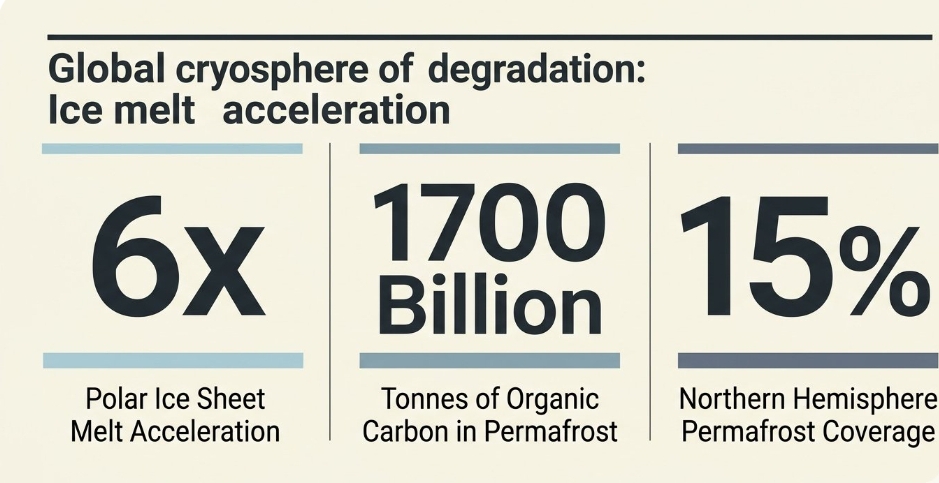
A definitive climate assessment released on November 03, 2026, by the United Nations Environment Programme and the International Cryosphere Climate Initiative has warned that overshooting the 1.5°C global warming threshold risks locking in irreversible catastrophic changes. The joint publications, titled State of the Cryosphere 2026: The Cost of Overshoot and Overshoot and the Cryosphere: Averting Global Meltdown, indicate that polar ice sheets are currently disintegrating six times faster than metrics tracked during the 1990s. This rapid degradation is projected to drive severe sea-level rises that surpass modern coastal adaptation thresholds.
Mountain Water Security and Carbon Release
The research highlights critical vulnerabilities across mountain glacier systems and permafrost reserves. Approximately 15 per cent of the Northern Hemisphere is underlain by terrestrial permafrost, which currently stores at least 1700 billion tonnes of organic carbon. Scientists warn that widespread permafrost thawing could release massive volumes of trapped greenhouse gases, further accelerating global temperature spikes. Mountain communities are already facing immediate hazards, exemplified by recent devastating glacial lake outburst floods in alpine regions.
Ahead of the global climate negotiations at COP31 in Antalya, Türkiye, international policy experts are urging governments to commit to immediate fossil fuel phase-out pathways. "To contain the global fallout and damage from ice loss in the world's polar and mountain regions, overshoot needs to be kept to the absolute minimum," stated glaciologist Dr James Kirkham, the coordinating lead author of the overshoot report. Environmental organisations are calling for carbon emissions to be lowered by at least five per cent annually to prevent cascading planetary tipping points.
"The accelerating loss of ice is an emergency demanding immediate and far-reaching action to limit the extent and duration of a 1.5°C overshoot," observed Dr Jerry Jose, Senior Scientist at the Greenpeace International Science Unit. Analysts emphasise that while an eventual return to cooler temperatures could slow ice loss, many cryosphere changes are essentially permanent on human timescales. "Ice sheets melting six times faster than 30 years ago takes climate impacts past limits of adaptability," warned Bill Hare, Chief Executive Officer of Climate Analytics, noting that this must serve as an urgent wake-up call for international ministers.
Editor's Note
The stark findings confirm that treating the 1.5°C threshold as a negotiable milestone rather than a hard physical boundary is a profound systemic error. Because cryosphere collapse operates on irreversible geological timescales, future carbon removal strategies cannot remedy the immediate loss of freshwater reservoirs and coastal stability. International frameworks at the upcoming Antalya summit must pivot completely from speculative future technologies toward binding annual emissions reductions to preserve remaining planetary albedo and stabilise vulnerable global water towers.



Leave a comment