

TreeTake Network
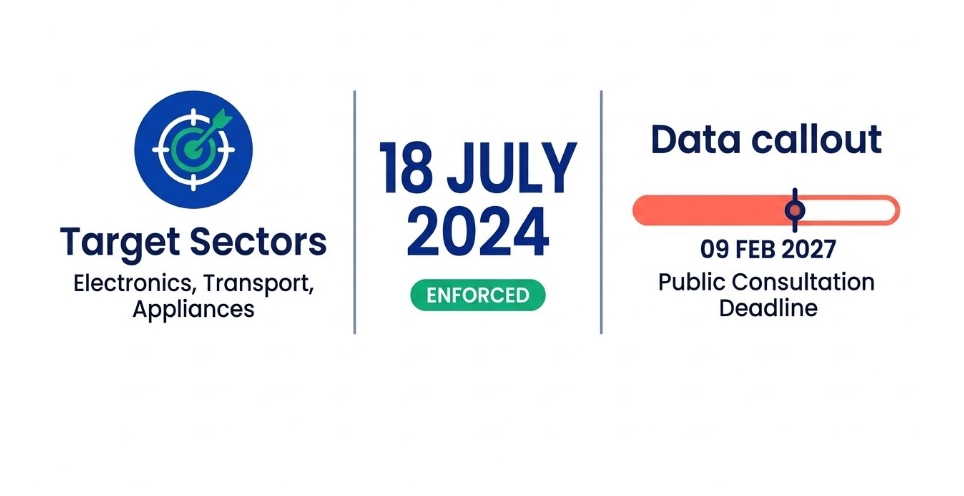
The European Commission introduced an extensive open public consultation on November 03, 2026, to gather empirical evidence for upcoming horizontal ecodesign requirements aimed at making everyday consumer products significantly easier to repair. Operating under the statutory frameworks of the Ecodesign for Sustainable Products Regulation, which entered into force on July 18, 2024, the initiative seeks to systematically extend product lifespans, lower maintenance costs, and drastically restrict industrial material waste streams across all member states. The data-gathering exercise will remain open until February 09, 2027, and will directly formulate the structural impact assessments required for a subsequent delegated act.
Target Product Categories and Global Manufacturing Standards
The regulatory evaluation concentrates primarily on three core manufacturing categories that play a pivotal role in consumer waste management. These encompass consumer electronics including audio equipment and wearable devices, light means of transport such as e-bicycles and electric scooters, and small household appliances ranging from kitchen equipment to personal care devices. The framework systematically addresses ongoing market challenges encountered by both independent repair professionals and everyday consumers, focusing heavily on removing access monopolies over diagnostic tools and spare parts.
The public consultation represents a major step towards standardising sustainability across the single market. "We want to ensure that products placed on the EU market are not only energy-efficient but also durable, reliable, and easy to repair or recycle," stated European Commission Representative Marc Lemaitre during the framework launch. The Commission is actively encouraging contributions from municipal authorities, business consortiums, and consumer rights organisations to establish transparent repairability metrics. The proposed rules are designed to phase out intentional industrial obsolescence and implement mandatory visibility scores at the direct point of sale, forcing global manufacturers to standardise their designs for simpler disassembly and component replacement.
Editor's Note
Mandating product repairability represents a vital step in decoupling economic growth from industrial resource depletion. To maximise the long-term impact of these ecodesign regulations, global authorities must look to legalise open-access diagnostic data and eliminate proprietary tool restrictions, transforming the global consumer supply chain from a linear disposal system into a closed-loop framework.



Leave a comment