

Expert Expressions
CP Rajendran is a geoscientist and an adjunct professor at the National Institute of Advanced Studies, Bengaluru and co-author of the book: The Rumbling Earth – The Story of Indian Earthquakes
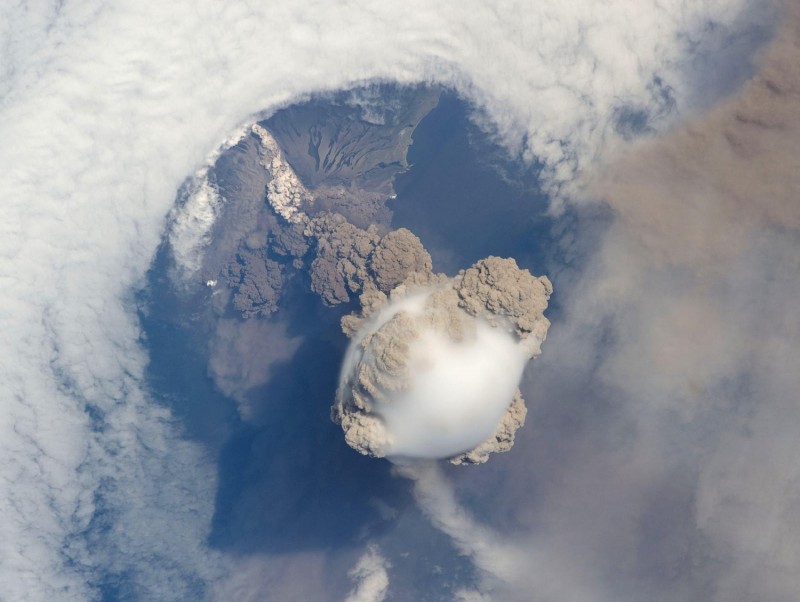
The Permian Period was the final period of the Palaeozoic Era, lasting from about 298.9 to 251.9 million years ago. It followed the Carboniferous Period and preceded the Triassic Period, marking the beginning of the Mesozoic Era. Noted for the formation of the supercontinent Pangaea, the Permian to Early Triassic (252-247 million years ago) was a time of significant climatic shifts that caused global environmental stress, culminating in the severest of the five extinction events in Earth’s geological history, known as the "Great Dying." The massive volcanic eruptions in Siberia and the emission of carbon during that period have played a crucial role in triggering the extinction event. The source of the Siberian Traps basalt is believed to be a mantle plume at the base of the crust, which erupted through the Siberian craton.
The Permian-Triassic mega-greenhouse condition resulted in the loss of more than 80 per cent of marine and terrestrial life. During volcanic eruptions, vast amounts of greenhouse gases, including water vapour, carbon dioxide, and sulphur dioxide, are released. Although sulphur dioxide is not a greenhouse gas, it can cause acid rain and air pollution, and it reacts with atmospheric components to produce aerosols that scatter radiation, thereby trapping heat. Volcanoes also release thermogenic gases generated when magma intrudes into sedimentary rocks, releasing trapped gases like methane, a significant greenhouse gas.
The massive disruption to the carbon cycles, high air and sea temperatures and an acidic ocean signal rapid additions of greenhouse gases to the atmosphere. But the question that puzzled researchers was why the global hot-house conditions persisted for more than 5 million years. The increased global silicate weathering would have been expected to bring CO2 levels back to pre-volcanism levels within approximately 100000 years. This occurs through a chemical process where rainwater, slightly acidic from dissolved CO2, reacts with silicate rocks, transforming them into stable carbonate minerals – an efficient natural way of carbon sequestration, and stabilising the global climate. Therefore, the prolonged recovery period for oceanic and terrestrial ecosystems to return to their original states remained an intriguing unanswered question.
In a paper published in Nature Communications (July 2 2025), a group of researchers from the China University of Geosciences, Wuhan, and Leeds University in the United Kingdom have shed more light on this extended period of extinction. The classic rock sections displaying biotic evidence of the Permian-Triassic (P-Tr) boundary in Southwest China (eastern Yunnan and western Guizhou) are key areas providing insights into the extinction event on land. The team conducted extensive field studies at sites in China that exposed Permian rock outcrops containing fossil records, and they were able to reconstruct maps of changes in plant productivity during the Permian-Triassic boundary.
They conclude that the collapse of the tropical forest during that period triggered a climate tipping point. Their findings demonstrated that reduced vegetation decreased the Earth’s capacity for carbon sequestration, thus extending the duration of high carbon dioxide levels. Using an extensive archive of fossils, they reconstructed the distribution maps of plants and trees before, after, and during that time across various regions of the world. The data from these studies confirmed that vegetation took a longer time to establish, thereby lowering the Earth’s ability to absorb carbon from the atmosphere. This explains why the Permian-Triassic extinction event lasted for 5 million years, longer than the usually expected period needed for recovery.
The studies show that during the Permian Great Dying event, atmospheric carbon dioxide levels increased from 400 ppm (parts per million) to 2500 ppm, with approximately 3900 to 12,000 gigatonnes of carbon added to the ocean-atmosphere system during that period. These figures are vastly greater than current human emissions. According to the International Energy Agency, in 2022, the global energy-related CO2 emissions reached a new high of 36.8 gigatonnes. Currently, the global average atmospheric carbon dioxide stands at 422 parts per million. And, unprecedented over at least the last 800,000 years, this recent surge in greenhouse gases has led to the beginning of climate change. Its future severity will depend on how much more carbon humans add to the atmosphere.
The message from this research is clear. It emphasises the vital role of tropical rainforests as important climate buffers. Forests absorb carbon dioxide from the atmosphere through photosynthesis, a process where they convert CO2 and water into oxygen and glucose, using sunlight as their energy source. This glucose supports the growth of trees, and excess is stored in various parts of the tree, including the trunk, branches, leaves, and roots. Essentially, forests function as carbon sinks, absorbing more CO2 than they release. Global discussions focus on reducing carbon emissions to prevent further global warming. Equally important is avoiding crossing critical thresholds that could cause the further collapse of tropical rainforests. Experts agree that success depends on a combination of local efforts to halt deforestation and degradation, and to expand restoration, alongside international efforts to control greenhouse gas emissions.



Leave a comment