

TreeTake Network
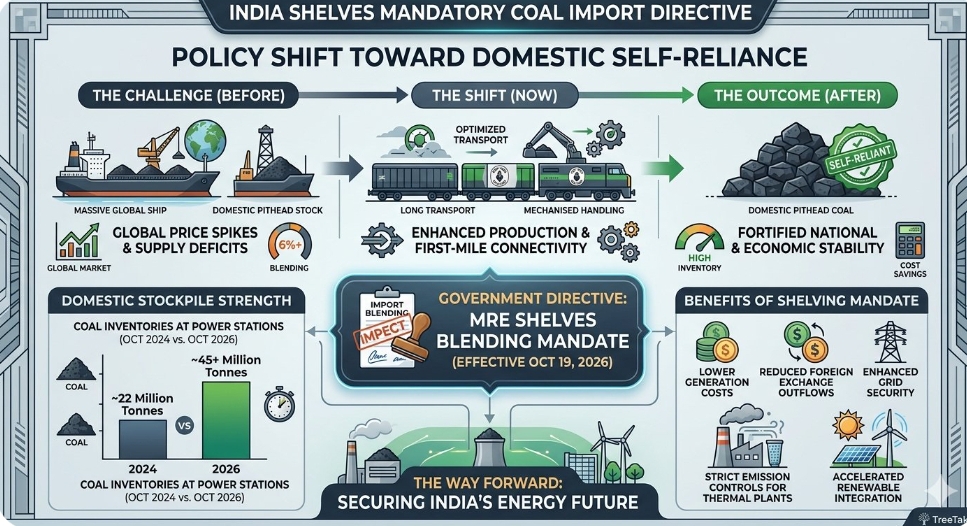
The Ministry of Power has officially withdrawn its long-standing directive that mandated domestic thermal power stations to import coal for blending purposes, effective today, October 19, 2026. This decisive policy shift comes on the back of a significant stabilisation in domestic coal production and a substantial accumulation of fuel inventories at power generation hubs across the country.
The regulation, which originally required power generation companies to blend a minimum of six per cent imported coal with domestic supplies, was introduced as an emergency measure to prevent blackouts during periods of peak seasonal demand. However, a sustained surge in output from public mining companies has eliminated the domestic supply deficits that previously plagued the power sector.
Surging Domestic Production Eases Supply Strain
The decision to shelve the import mandate follows a comprehensive review of fuel stocks by the Central Electricity Authority. Current data indicates that coal inventories at domestic pithead and non-pithead power plants have crossed an aggregate of forty-five million tonnes, providing a comfortable buffer for the upcoming winter season.
This inventory cushion is primarily attributed to infrastructure enhancements implemented by Coal India Limited and the Ministry of Railways. Explaining the rationale behind the policy withdrawal, Amrit Lal Meena, Union Coal Secretary, stated: "Our strategic focus on enhancing first-mile connectivity, expanding mechanised coal handling plants, and operationalising new commercial blocks has paid off. Domestic production has reached a trajectory where external blending mandates are no longer necessary to sustain grid security, allowing us to rely entirely on indigenous reserves."
Financial Relief for Power Distribution Utilities
The mandatory purchase of expensive international coal had placed a heavy financial burden on state-owned power distribution companies, as the high costs of imported fuel were ultimately passed on to industrial and domestic consumers through fuel surcharge adjustments. The removal of this mandate is expected to lower the average cost of power generation, offering immediate financial relief across the supply chain.
Industry experts have welcomed the move, noting that it reflects a mature alignment between fuel supply logistics and power generation requirements. Speaking on the economic implications, Vikram Singh, Director of Energy Research at the Delhi Ecological Foundation, remarked: "By removing the artificial pressure to import high-cost thermal coal, the government is lowering generation costs and reducing unnecessary foreign exchange outflows. This decision validates India's capacity to meet its baseline electricity demand internally, even as the broader grid transitions toward renewable integration."
Environmental Implications and Efficiency Goals
While the policy shift represents an economic victory, environmental analysts emphasise that it underlines the urgent need for domestic thermal plants to improve their operational efficiency. Domestic coal typically possesses a higher ash content than imported varieties, meaning that power generation facilities must strictly operate their flue-gas desulphurisation units to mitigate local air pollution.
The Ministry of Power has clarified that while the sweeping mandate has been dropped, individual power stations retain the autonomy to import coal if local logistics or specific boiler architectures require it. However, the overarching national policy has shifted firmly toward self-reliance, with strict regulatory mechanisms remaining in place to ensure that thermal units meet stringent environmental emission norms moving forward.
Editor's Note
Shelving the mandatory coal import order is a practical economic decision that reflects India's growing domestic resource stability. However, achieving self-reliance in fossil fuel supply should not obscure our long-term climate commitments or dilute the momentum of the green energy transition. As we rely more heavily on domestic coal to secure baseline power, it is absolutely vital that regulatory bodies enforce strict emissions standards on thermal plants to prevent an escalation in regional air pollution. True energy security will only be realised when we successfully pair this temporary fossil fuel stability with an accelerated deployment of clean, renewable alternatives.



Leave a comment