

TreeTake Network
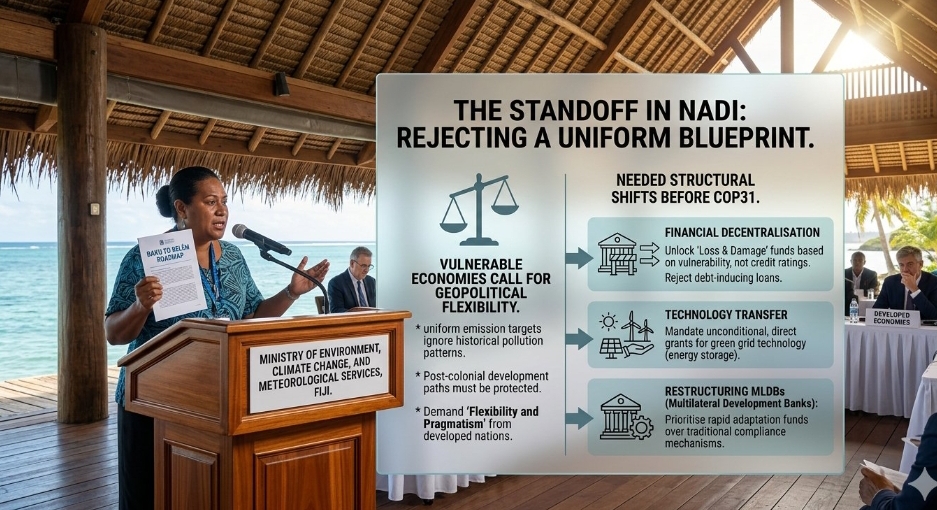
Deep geopolitical divisions have surfaced during the high-level preliminary ministerial negotiations in Fiji, as developing economies formally demanded a major structural revision of the international climate finance framework. Speaking before the gathered international delegations, leadership representatives issued a firm ultimatum to wealthier industrialised countries, asserting that the global transition away from fossil fuels will collapse entirely without immediate, unconditional technology transfers and massive capital restructuring.
The confrontation centres on the final draft of the Baku to Belém Roadmap, which outlines the post-2025 international climate goals. Developing states are strongly resisting pressure from developed economies to accept uniform, legally binding emissions reductions. They argue that imposing a singular template across vastly unequal economies ignores historical industrial pollution patterns and severely limits the economic growth of post-colonial societies.
Senior climate negotiators from the Global South expressed profound frustration with the persistent administrative bottlenecks blocking access to existing loss and damage funds. International climate policy experts stated that demanding vulnerable communities to phase out affordable energy sources whilst withholding the capital required to build green grids is a form of environmental hypocrisy. They noted that the current international framework treats rich and poor states as equals in liability, whilst they remain worlds apart in infrastructure and capital access. They urged immediate implementation of direct grants rather than loans that worsen sovereign debt.
The ministerial coalition has formally requested an emergency restructuring of multilateral development banks ahead of the upcoming winter summits. The joint declaration outlines a new framework where climate adaptation funds are automatically unlocked based on regional climate vulnerability metrics, bypassing traditional credit rating assessments. Leaders warned that if developed nations refuse to show flexibility and pragmatism during the final planning sessions, the upcoming climate summit risks a historic collapse, turning international treaties into empty rhetorical exercises.
Editor's Note
The diplomatic standoff in Fiji exposes the core systemic injustice that continues to paralyse international climate policy. Treating climate mitigation as a uniform global obligation whilst maintaining highly unequal access to clean technology guarantees institutional failure. Wealthier nations cannot continue to outsource the moral weight of green transitions to resource-strapped economies without providing the foundational capital. Moving forward, the international community must transition from debt-inducing loan systems to direct, non-repayable technology transfers. Pragmatism must override bureaucratic symmetry, or the targets of the Paris Agreement will be lost to procedural gridlock.



Leave a comment