

H. N. Singh
(Lions International Faculty, HAM Radio Licensee, Naturist, Member SPHEEHA, Trekker & Mountaineer)
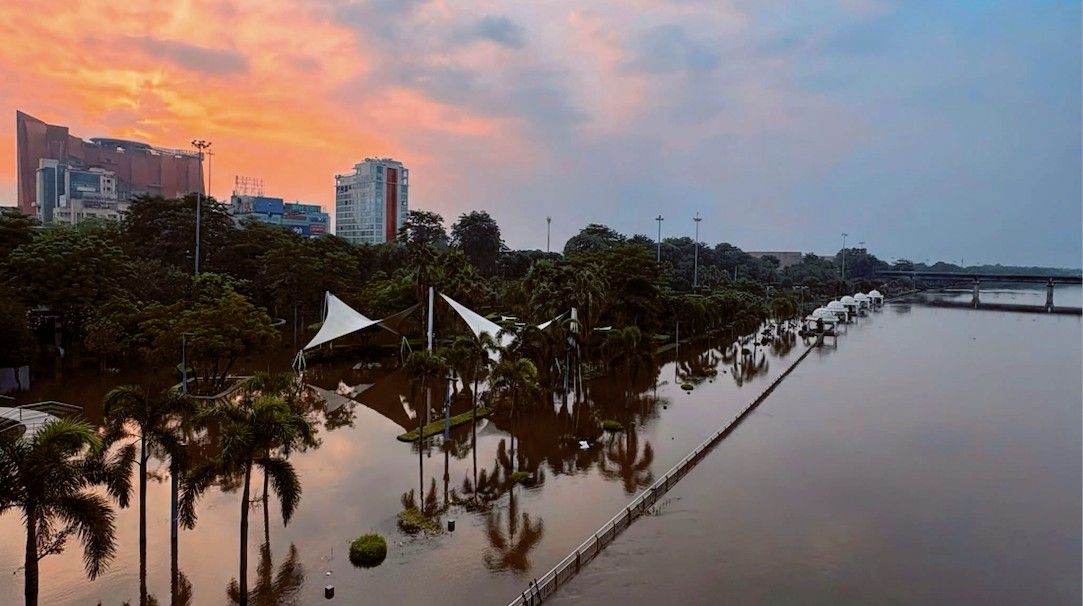
The recent flooding in Lucknow is a painful reminder that nature cannot be ignored in the name of development. The Gomti River, which has been part of the city’s life for generations, is now exposing the critical weaknesses in our urban planning. Recent heavy rainfall and rising river levels due to substantial upstream inflows from districts like Pilibhit and Lakhimpur Kheri are natural factors, but the situation becomes vastly worse when floodplains are encroached upon, natural drains are blocked, and asphalt roads and concrete buildings leave little space for rainwater to seep into the ground.
The scale of the crisis has reached unprecedented proportions, leaving over 5,000 families and nearly 3 lakh residents severely affected across the region. Rapid, aggressive urban development—particularly expanding towards the southeast along Sultanpur Road and high-end areas like the Gomti Nagar Extension—has left virtually no vacant plots or permeable green spaces to absorb stormwater. When the slow-flowing, plains-born river cannot carry the excess water and drainage systems fail, low-lying areas get heavily submerged. Neighbourhoods like Faizullaganj, Ghaila, Daud Nagar, Saitha, and Loharamau have been turned into vast, stagnant lakes with water levels reaching four to six feet deep inside homes, cutting off thousands from clean drinking water, electricity, and emergency medical access. Even marquee modern infrastructure like the service lanes of Shaheed Path, the Phoenix Palassio mall, and the Ekana Stadium have faced severe waterlogging, highlighting that no corner of the city is immune.
The current deluge echoes the most catastrophic moments in the city's history, forcing a grim comparison with the historic Lucknow floods of 1923 and 1960. In 1923, a massive discharge of 75,000 cusecs breached early settlements, but it was the deluge of October 1960 that remains etched as the city's worst disaster. Back then, the Gomti surged to a record 371.4 feet, completely submerging the heart of the city—including Hazratganj, Kaiserbagh, and Mahanagar—under 8 to 10 feet of water, forcing residents to navigate streets by boat. Decades later, despite the subsequent construction of massive marginal embankments and the Hanuman Setu to shield the urban core, the city has failed to learn its lesson. The current crisis exposes a modern failure: while the old city remains protected by brick walls, the new sprawling urban extensions have been aggressively built directly onto the river’s natural floodplains, inviting the exact same devastation back into the lives of its citizens.
The ground reality for sufferers across these newly vulnerable zones is a test of sheer endurance, where displaced families are forced to navigate stagnant water, loss of livelihood, and absolute isolation. The anguish is heavily amplified in the peri-urban fringes and informal settlements where the safety net is thinnest.
Malti Kashyap, a daily wage labourer from the heavily inundated Faizullaganj Second Ward, wept as she described the threat to her family's survival:
"The water rose in the middle of the night, bringing filth, hyacinths, and poisonous snakes right into our room. My husband and I are forced to wade through waist-deep, foul-smelling water just to find manual work, because if we don't risk our lives in this current, our children will literally starve to death. The administration has left us out here with no boats, no medicines, and no clean water. Everything we built with our sweat has been ruined by this toxic backflow."
For the agricultural communities bordering the city, the flood has wiped out entire generational livelihoods. Maulal, an 81-year-old farmer from Daud Nagar born in 1945, spoke with deep resentment while standing near his submerged fields:
"I have tilled this land along the Gomti my entire life, and what we are seeing in 2026 is the worst nightmare since the 2008 floods. Back in 2008, hundreds of us marched to the Lucknow Development Authority office begging for a protective embankment, but they gave us empty papers and false promises. Today, the paddy, millet, and vegetable crops of over 3,500 farmers are completely rotted under the water. Our cattle are tied up on concrete rooftops because there is no dry ground left. They built high-rises for the rich, but they drowned the farmers who fed this city."
Even in the premium residential enclaves, the tone of panic turns toward absolute financial shock. Mohammad Imran, a resident near the Gomti Nagar Extension, highlighted the elite infrastructure failure:
"We paid crores for premium apartments believing the developers' promises of modern engineering. But the moment the river rose, the drainage network completely choked, sending millions of gallons of water into our basement parking within hours. Dozens of luxury vehicles are completely ruined, and our expensive power backup systems are fried. The authorities blame the natural flow of the river, but it is their lack of foresight and sanctioned constructions on the natural path of the water that have trapped us like this."
Officials, meanwhile, point to the compounding engineering challenges of managing a heavily altered river system. A senior official explained the shared administrative complexities of the disaster:
"The current situation is the result of unprecedented rainfall combined with heavy upstream inflows into the Gomti, which naturally fills the low-lying neighbourhoods built directly along the floodplain. This crisis cannot be pinned on a single agency, as statutory responsibilities are structurally divided. While the irrigation department manages river regulation and embankments, our mandate at the LDA is strictly limited to planned urban infrastructure within our notified zones."
To manage the current deluge, Mukesh Vaish, Executive Engineer of the Irrigation Department, noted the desperate operational measures being taken:
"We have opened all 10 gates of the Gomti Barrage to allow maximum water to flow downstream, and we closed 48 major drainage outlets specifically to prevent the swollen river water from back-flowing into the city's internal drainage network. The water from the upper catchment takes days to pass through, meaning low-lying and downstream areas will take much more time to recede."
The disaster has rapidly spiralled into a bitter political row over structural accountability and relief distribution. Opposition parties have launched fierce attacks on the ruling administration, accusing them of gross negligence, corruption in urban planning, and executing "paper-only" drainage cleaning campaigns before the monsoon arrived. Government ministers have counter-attacked, claiming the opposition is merely politicising a natural calamity while state disaster teams work around the clock. However, ground reports from cut-off localities reveal that despite the political grandstanding, real relief—including food packets, anti-larval chemical spraying, and evacuation boats—remains severely delayed, leaving thousands of citizens to fend for themselves on footpaths or exposed rooftops.
Environmentalists and scientists argue that the city's suffering is a self-inflicted, man-made disaster caused by ignoring the river’s natural topography. A bathymetry survey conducted by the revealed that the Gomti riverbed has accumulated up to 50 cm of silt, drastically reducing its capacity to carry runoff.
At the core of the ecological degradation is the highly controversial Gomti Riverfront Development project. Originally pitched as an aesthetic marvel to beautify the city, experts like (BSIP) and (BBAU) note that the project severely harmed the river's hydrology. By replacing natural mud and clay banks with rigid concrete walls, the project destroyed the river's natural filtration and groundwater recharge capabilities. Furthermore, building massive concrete structures and narrowing the river channel by over 40% created multiple artificial obstructions that trap silt, choke natural drainage, and cause the river to violently overflow into low-lying urban areas during heavy monsoons.
While authorities propose engineering solutions such as embankments toward Sitapur and a ₹182-crore project for Faizullaganj, Lucknow University emphasises the need for scientifically backed planning, high-resolution satellite monitoring, and mandated green cover. Restoring wetlands, protecting drainage channels, and giving the Gomti its natural space remain essential for a safe and liveable Lucknow.


Leave a comment