

TreeTake Network
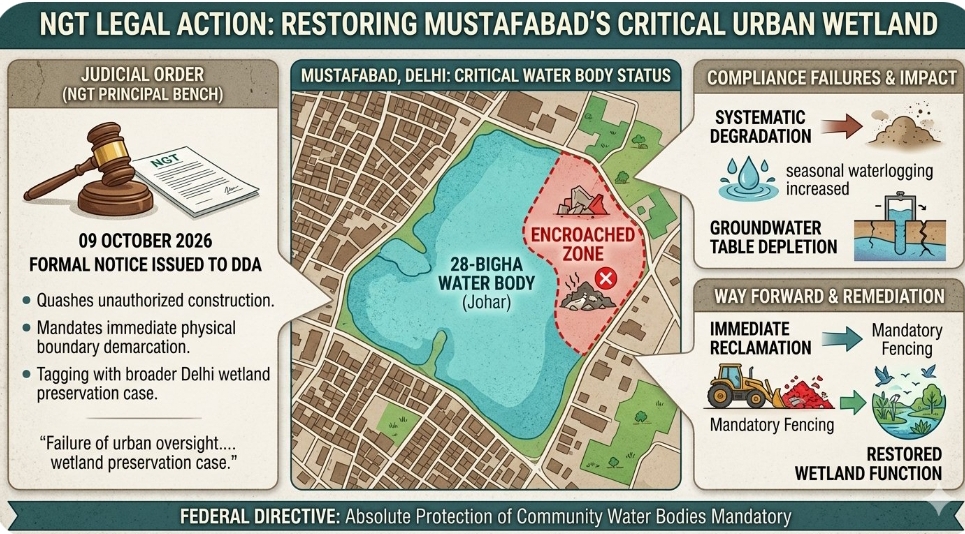
The Principal Bench of the National Green Tribunal has officially issued a formal legal notice to the Delhi Development Authority regarding the illegal encroachment and systematic degradation of a massive 28-bigha water body located in the Mustafabad village area of northeast Delhi. The judicial intervention, initiated during a formal hearing on 9 October 2026, follows a public interest petition highlighting a substantial compliance failure by urban municipal planning authorities to protect local natural wetlands from unauthorised commercial infrastructure expansion.
The tribunal bench, headed by Chairperson Justice Prakash Shrivastava, reviewed detailed aerial surveys and revenue records presented by the applicants. The documentation explicitly proved that the historical boundaries of the village reservoir, locally known as a Johar, have been progressively backfilled with construction debris to facilitate illegal layouts. The bench expressed severe dissatisfaction over the lack of proactive oversight, noting that the destruction of this vital natural urban drainage sink directly contributes to severe seasonal waterlogging and the depletion of the local groundwater table.
Legal counsel representing the civic petitioners argued that despite repeated formal complaints submitted to regional land-owning agencies over the past calendar year, no physical demolition or boundary restoration work had been executed on the ground. Addressing the statutory oversight, the tribunal bench noted that the failure to protect specified community water bodies constitutes an absolute violation of federal environmental preservation directives. The DDA and connected state pollution control panels have been granted a strict timeline to submit comprehensive action-taken reports detailing immediate reclamation and fencing strategies for the entire 28-bigha wetland expanse.
Editor's Note
This judicial notice serves as a critical reprimand to state development agencies that consistently prioritise rapid concrete expansion over the maintenance of essential civic eco-infrastructure. As Delhi battles escalating climate vulnerability, including erratic monsoon cycles and intense urban heat island effects, natural water bodies act as primary defence buffers. The way forward requires a mandatory shift from reactionary litigation to permanent, digitally monitored boundary protections for all remaining urban wetlands to ensure collective ecological security.



Leave a comment