

TreeTake Network
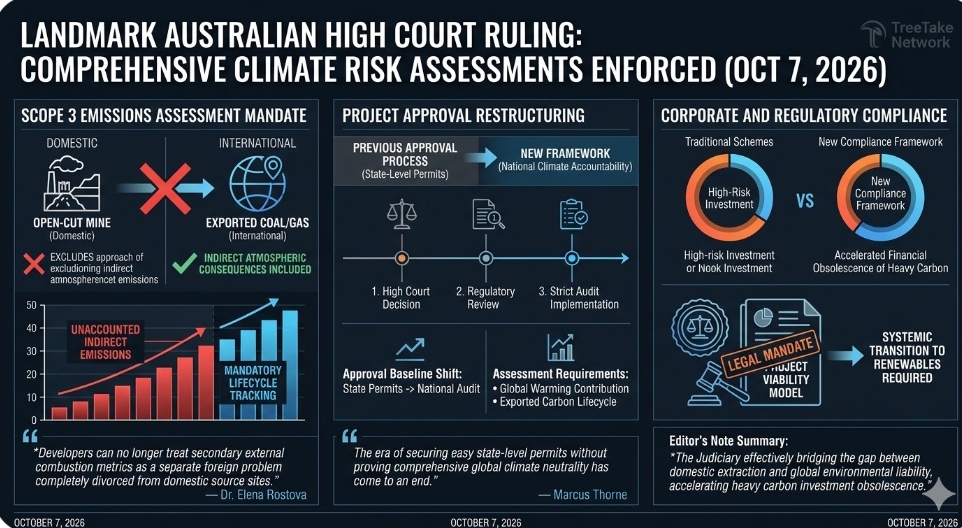
The expansion of traditional energy extraction faces unprecedented structural barriers following a decisive environmental intervention from the highest levels of the judiciary. On 7 October 2026, the Australian High Court issued a final legal ruling that completely reshapes national approval frameworks for all future open-cut mineral developments. The historic verdict establishes a legally binding precedent requiring developers to incorporate exhaustive, long-term environmental assessments before municipal authorities can grant operational clearances.
Structural mandates and indirect emission variables
The focus of the litigation centres upon the legal obligation to account for downstream carbon costs that occur well after initial extraction. The judicial panel concluded by a clear majority that regulators failed to examine indirect atmospheric consequences, specifically tracking how exported commodities impact global heating indices when consumed overseas. Environmental litigation expert Dr Elena Rostova observed during a post-trial address that the judicial consensus marks a permanent structural shift in administrative accountability. She stated that the ruling means developers can no longer treat secondary external combustion metrics as a separate foreign problem completely divorced from domestic source sites.
Corporate adjustments and regulatory compliance limits
The legal precedent introduces immediate complications for mining conglomerates seeking to extend ageing infrastructure permits or develop untouched subterranean deposits. Industry compliance boards are scrambling to realign their corporate strategies, recognising that traditional mitigation schemes are entirely inadequate under the new framework. Speaking outside the court registry, resource regulation strategist Marcus Thorne emphasised that the operational landscape has altered overnight. He argued that the era of securing easy state-level permits without proving comprehensive global climate neutrality has come to an end, forcing companies to restructure their long-term project viability models.
Editor's Note: The landmark judicial intervention establishes a powerful administrative mechanism that bridges the gap between domestic extraction and global environmental liability. Moving forward, national planning departments must design rigorous, transparent auditing systems to quantify total product lifecycles prior to breaking ground. The brief analysis suggests that by formalising the assessment of indirect emissions, the judiciary has effectively accelerated the financial obsolescence of heavy carbon investments, making systemic transition to renewable alternatives the only legally viable path forward.



Leave a comment