

TreeTake Network
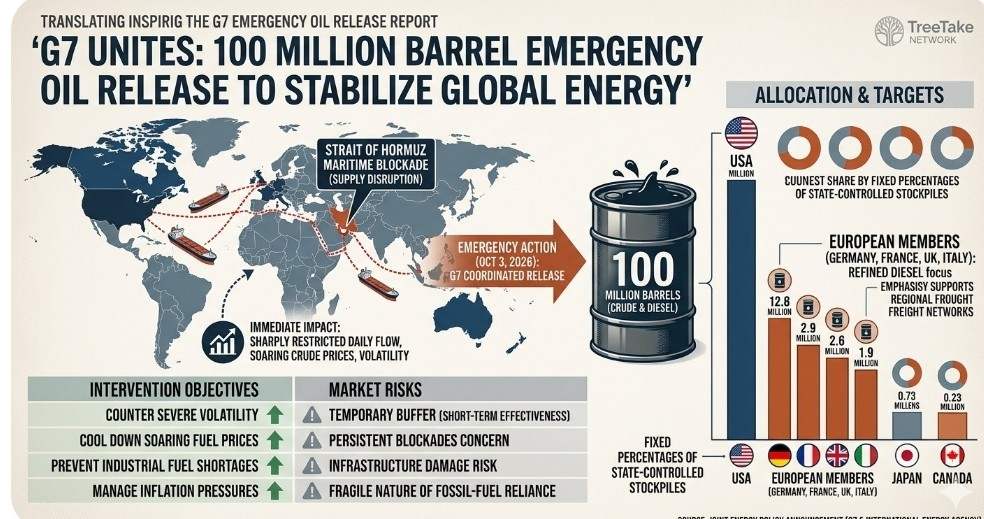
Following intense diplomatic coordination led by the United States, G7 nations today agreed to a coordinated release of 100 million barrels of crude oil and diesel from their strategic emergency reserves. The extraordinary market intervention aims to counter severe volatility in global energy markets and cool down soaring fuel prices. The emergency deployment comes in immediate response to critical supply disruptions in the Middle East, where vital shipping channels have faced consecutive blockades and projectile attacks over the past forty-eight hours.
The coordinated release is designed to quickly inject liquidity into a highly strained global supply chain. The blockades along key maritime corridors like the Strait of Hormuz have trapped commercial oil tankers and sharply restricted the daily flow of crude to international markets, causing crude prices to surge rapidly. Under the emergency plan, member nations—including the United States, Japan, Germany, France, the United Kingdom, Italy, and Canada—will release fixed percentages of their state-controlled stockpiles into the commercial market over the coming weeks to prevent acute industrial fuel shortages.
The intervention reflects an urgent attempt by major consumer economies to manage inflation pressures. Industrial operations and transport logistics worldwide have felt the immediate impact of the sudden energy spike, raising fears of broad economic slowdowns. By releasing 100 million barrels, the G7 aims to provide a temporary supply cushion, giving shipping companies and energy distributors time to reroute vessels away from high-conflict transit corridors without triggering further price shocks.
The logistics of the release will be closely managed by individual national energy authorities to ensure maximum efficiency. The United States is scheduled to supply the largest share from its Strategic Petroleum Reserve, whilst European members will focus heavily on releasing refined diesel supplies to support regional freight networks. Officials from the International Energy Agency stated that member states are prepared to sustain high supply levels and will monitor market balances continuously to determine if further tranches are necessary to maintain industrial stability.
Market analysts have expressed mixed views on the long-term effectiveness of the emergency release. While the announcement succeeded in slightly lowering immediate crude futures in afternoon trading, energy experts point out that strategic reserves provide only a short-term buffer. If the regional maritime blockades persist or if physical infrastructure suffers lasting damage, the injected volume will only delay a deeper global supply deficit, highlighting the fragile nature of fossil-fuel reliance during geopolitical crises.
Editor's note: This report covers the emergency joint energy policy announcement issued on 3 October 2026 by the G7 member states and coordinated energy regulatory bodies.



Leave a comment