

TreeTake Network
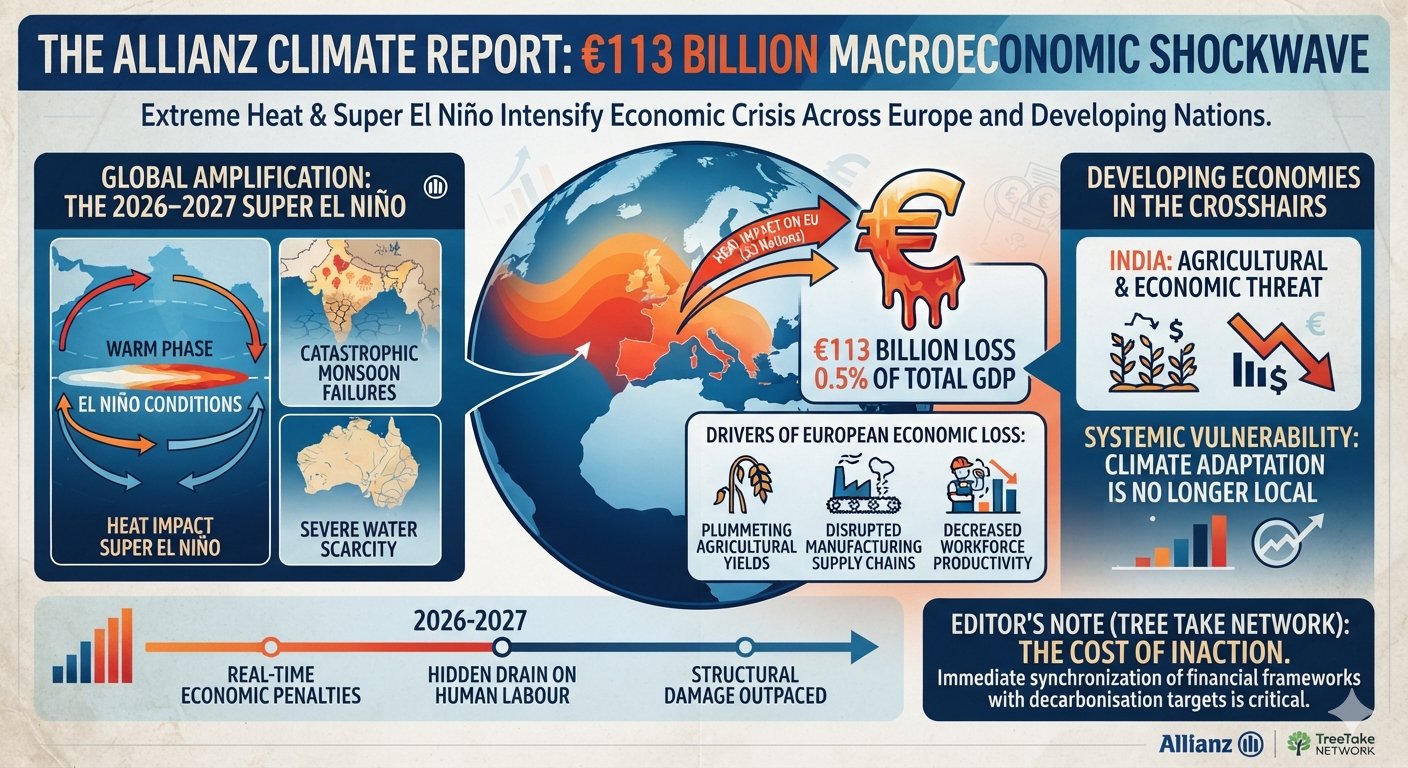
The global climate crisis is rapidly shifting from an ecological emergency into a devastating macroeconomic shockwave. A landmark study released by financial services giant Allianz has revealed that extreme heatwaves across 30 European nations are projected to wipe a staggering €113 billion off the continent's economic output this year. This fiscal haemorrhage represents nearly half a per cent of the combined Gross Domestic Product of the affected countries, with major economies absorbing the heaviest blows.
Southern Europe Bears the Brunt
The report underscores a stark geographical disparity in how climate damage manifests across Europe. Mediterranean nations, already battling prolonged droughts and infrastructure strain, are facing the most severe economic contractions. Italy and France alone account for a massive share of the calculated losses, driven primarily by plummeting agricultural yields, disrupted manufacturing supply chains, and decreased workforce productivity during peak summer temperatures.
Commenting on the systemic danger, Frank Sommerfeld, Chief Executive Officer of Allianz Insurance AG, warned: "Heat is a widely underestimated risk. It puts a strain on people, infrastructure and the economy alike, and exacerbates many existing dangers such as drought, forest fires and extreme weather."
The Super El Niño Amplification
Compounding the European crisis is the rapid intensification of the 2026–2027 Super El Niño cycle. Meteorologists warn that this iteration is shaping up to be one of the most volatile in recorded history. The global atmospheric phenomenon is already destabilising traditional weather patterns well beyond Europe, triggering catastrophic monsoon failures across South Asia and severe water scarcity across the Southern Hemisphere.
Developing Economies in the Crosshairs
While wealthy European nations grapple with billions in lost output, developing economies are facing existential infrastructure crises. The Allianz data highlights that India faces an immediate multi-billion-dollar agricultural and economic threat due to failing rain cycles. Experts behind the tracker note that these compounding events demonstrate that climate adaptation can no longer be treated as a localised issue, but as a systemic vulnerability threatening international supply chains.
The report explicitly cautions that "heat can reduce output without destroying physical assets," proving that the hidden drain on human labour is outpacing visible structural damage.
Editor's Note
As a publication dedicated to uncovering environmental governance and climate transparency, the TreeTake Network notes that this latest financial assessment marks a critical turning point. For years, climate discourse has focused on future projections; this data proves the economic penalties are being paid in real-time. If global financial frameworks do not immediately synchronise with aggressive decarbonisation targets, the cost of inaction will rapidly outpace the global capacity to adapt.

.jpg?resize=780%2C450&ssl=1)


.jpg?resize=120%2C90&ssl=1)



Leave a comment