

Talking Point
Tree Take Network
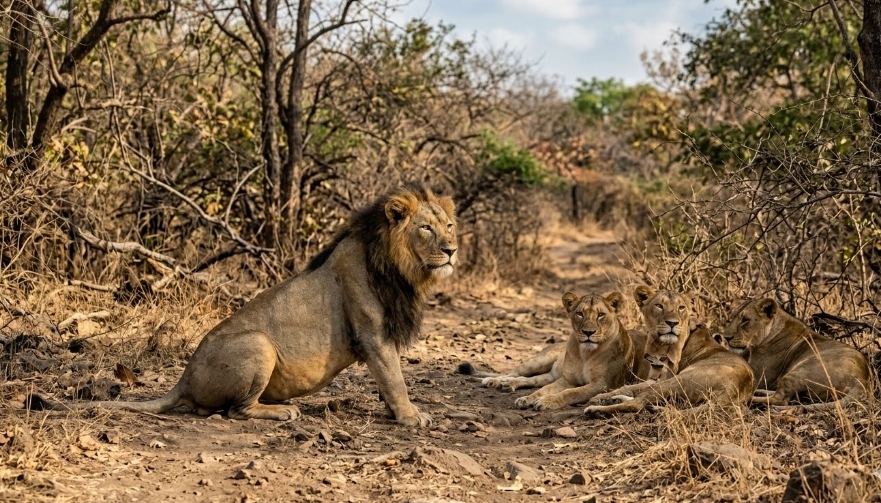
The issue of the Gir lion deaths has reached the Prime Minister’s portals, with current and former members of the Gujarat State Wildlife Board, along with prominent environmental activists, submitting detailed representations to Prime Minister Narendra Modi, Chief Minister Bhupendra Patel and senior officials of both the Central and Gujarat governments. The letters have sought immediate intervention to check the rising number of lion deaths in Gir and have also pointed out other irregularities that could be detrimental to the region's fragile ecosystem and lion conservation efforts. They have urged the authorities to take corrective measures to protect the ecological interests of the region.
To note, between mid-May and early June 2026, at least 11 to 13 lions—predominantly vulnerable cubs—perished within a short span across the Amreli and Gir Somnath districts of Gujarat. The geographic clustering of these deaths instantly revived the harrowing memories of the 2018 ecological disaster, when a lethal combination of Canine Distemper Virus (CDV) and tick-borne parasites swept through the eastern parts of the Gir forest, wiping out more than two dozen lions in a matter of weeks.
Between mid-May and early June 2026, 11 to 13 Asiatic lions—mostly vulnerable cubs—died in Gujarat’s Amreli and Gir Somnath districts. The deaths occurred in peripheral satellite habitats where expanding prides frequently encounter human settlements and livestock. This geographic clustering mirrors the 2018 ecological disaster, where Canine Distemper Virus (CDV) and tick-borne parasites killed over two dozen lions. Local trackers (Vanyajeev Mitras) are currently monitoring prides for lethargy, respiratory distress, and uncoordinated movement. Gujarat Forest and Environment Minister Arjun Modhwadia said the situation was under control and denied a widespread pandemic. Initial post-mortem examinations pointed to a suspected protozoan infection in cubs, alongside natural causes like territorial infighting and age in adults.
The state has launched an emergency medical drive: Quarantine: 17 symptomatic lions are isolated at Jasadhar and Jamwala rescue centres. Zoning: A strict 10-kilometre surveillance radius covers the Babariya and Jamwala ranges. Treatment: Specialised veterinary teams have initiated intensive deworming and anti-tick treatments for over 500 surrounding lions. Testing: Biological samples were sent to the Gujarat Biotechnology Research Centre (GBRC) in Ahmedabad for deep molecular analysis, bypassing national repositories like Pune's National Institute of Virology (NIV).
However, independent wildlife scientists criticise the state's lack of diagnostic transparency. Experts question how veterinary teams can formulate accurate treatment plans for the 17 quarantined lions before GBRC releases final laboratory data. Renowned wildlife biologist Dr Ravi Chellam warns that this low genetic diversity, combined with confining the entire wild population to a single continuous landscape, creates a recipe for a sudden extinction event.
While officials preliminarily blame babesiosis (a tick-borne parasitic disease causing severe anaemia), pathologists note that babesiosis rarely causes rapid mortality clusters on its own. It typically acts as a secondary, opportunistic infection after a highly contagious virus like CDV has already shattered the animals' immune systems.
The crisis highlights the extreme vulnerability of the Asiatic lion (Panthera leo persica). The entire wild population descends from fewer than 50 survivors protected in the early 20th century. This century-long inbreeding has caused a severe genetic bottleneck. Because their immune systems share identical vulnerabilities, a single mutated pathogen could theoretically bypass the defences of the entire species.
"The ongoing tragedy in the Amreli and Gir Somnath districts is a stark, undeniable reminder of why the Supreme Court’s 2013 legal mandate must be executed in letter and spirit without further delay," Dr Ravi Chellam reiterated with urgency. "No matter how world-class your veterinary response teams are, and no matter how many millions of rupees you spend on anti-tick drives or localised quarantines, you cannot out-administer biology. Leaving the world's entire wild population of Asiatic lions packed tightly into a single geographic pocket is a massive, irresponsible gamble. Right now, the entire future of this magnificent species is dangling by a terrifyingly thin thread. A second home is not a political luxury; it is an absolute biological necessity for survival."



Leave a comment