

Green Business
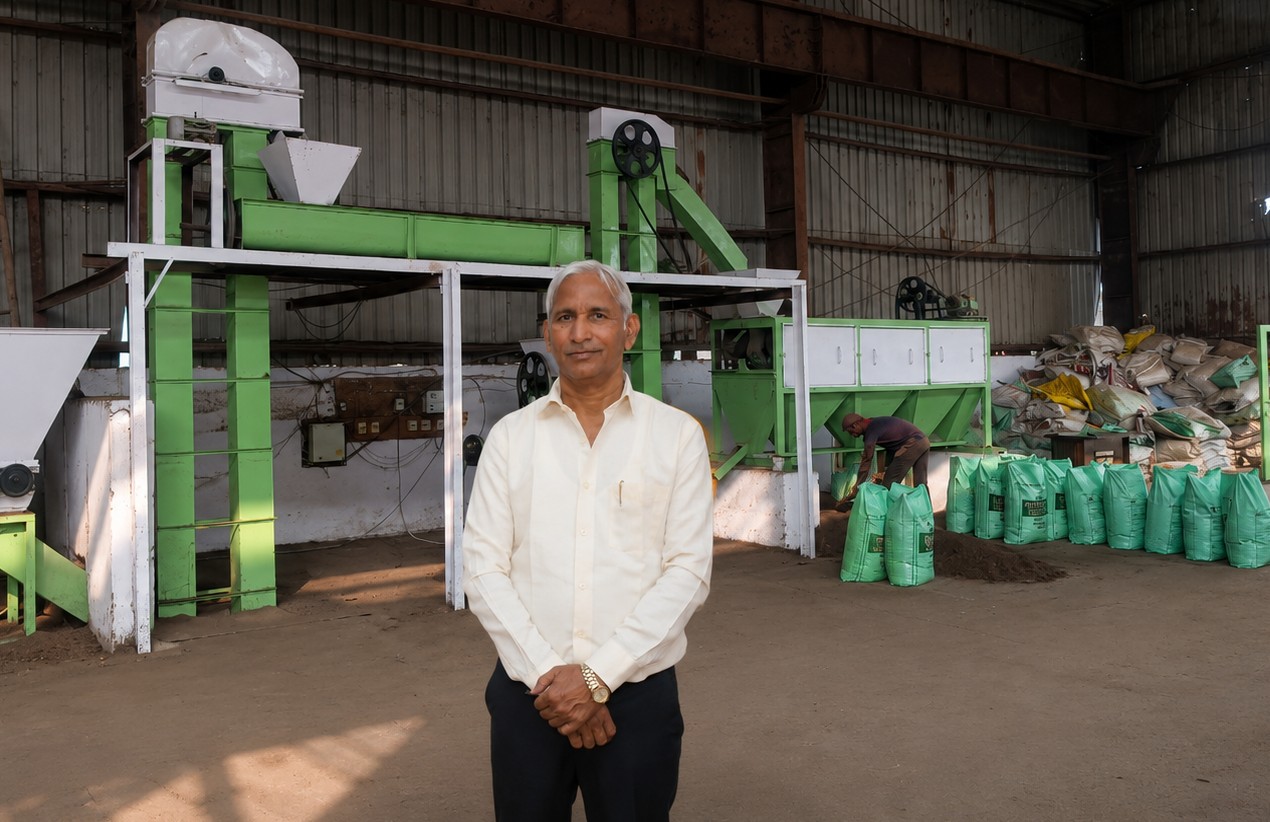
It is a common notion that environmental concerns can be a pastime or a hobby and not a profitable profession, especially in an urban world. However, every commercial activity need not deprive Mother Earth of its flora and fauna, tells Rajiv Khandelwal, owner of Indian Agro Organics, which produces organic fertilisers from municipal waste.…
Q: Transforming municipal waste and discarded flowers into fertiliser is highly complex. What biochemical challenges did you face when perfecting this formula to ensure balanced plant nutrients?
Producing high-quality organic fertiliser from municipal waste and discarded flowers is a scientifically demanding process that requires precise control over the biological composting cycle. One of the biggest challenges was maintaining the ideal balance of carbon, nitrogen, moisture and temperature, as these parameters directly influence microbial activity and the quality of the final compost. Floral waste, due to its high moisture content, decomposes much faster than other biodegradable municipal waste, making it difficult to achieve a uniform composting process. To overcome this, we developed a scientifically designed composting methodology that maintains an optimal biological environment through regular turning of the compost, controlled moisture management and the application of specialised organic microbial cultures. Throughout the process, we continuously monitor and optimise nutrient levels to ensure that the finished product complies with the standards prescribed under the Fertiliser Control Order (FCO), 1985, particularly with respect to nitrogen, phosphorus, and potash content.
Q: Sourcing town trash and temple floral waste involves massive segregation issues. How did you establish a reliable supply chain and collaborative model with Agra’s local authorities?
A successful waste-to-resource model depends on strong institutional collaboration. At Indian Agro Organics, we work under Public-Private Partnership (PPP) arrangements with the municipal corporation to process biodegradable waste that would otherwise reach landfill sites. Segregation at the source remains one of the industry’s biggest challenges. Our approach focuses on continuous coordination with municipal teams responsible for waste collection and transportation. Incoming material is further inspected and manually screened to remove non-biodegradable contaminants before entering the composting process. Consistent operations, transparent communication and adherence to environmental standards have helped us build a dependable working relationship with local authorities. This collaboration not only improves waste management but also converts valuable organic resources into products that support sustainable agriculture.
Q: TreeTake readers value the strict economics of sustainability. How did you structure this venture to become financially profitable and scalable rather than just an eco-project?
From the outset, we designed our business around the principle that environmental sustainability and commercial viability are mutually reinforcing. We firmly believe that a circular economy model can create a lasting impact only when it generates measurable environmental benefits while remaining economically sustainable. Our operating model integrates scientific composting technologies, process standardisation, stringent quality assurance and strategic collaborations with the municipal corporation, government organisations, and institutional buyers. By converting biodegradable waste into high-value organic fertilisers, we address critical waste management challenges while creating products that enhance soil health and deliver tangible value to the agricultural sector. The financial sustainability of our venture is driven by operational efficiency, optimised resource utilisation, and consistent product quality. Standardised production protocols, continuous process improvements and a scalable infrastructure enable us to expand operations without compromising quality or environmental compliance. Rather than positioning ourselves solely as an environmental initiative, we have built a commercially robust enterprise that demonstrates how responsible waste management can be transformed into a profitable, scalable and long-term business solution.
Q: Discarded floral waste often contains high moisture, pesticides and artificial dyes. What specific processing steps do you take to guarantee the final fertiliser is completely toxin-free?
Quality assurance begins at the source. Every consignment of floral waste received at our facility undergoes systematic inspection and segregation to remove plastics, packaging material, threads, synthetic decorations and other non-biodegradable impurities before entering the composting process. This initial screening is essential to maintain the integrity of the raw material. The segregated biodegradable waste is then processed through a scientifically controlled aerobic composting process. Critical process parameters—including the carbon-to-nitrogen ratio, moisture content, temperature, oxygen availability and turning frequency—are continuously monitored to promote efficient microbial degradation and pathogen reduction. The compost is subsequently subjected to an adequate curing period to ensure complete stabilisation, maturity and the formation of a safe, nutrient-rich organic amendment. Before dispatch, the finished compost undergoes quality evaluation in accordance with applicable Indian regulatory requirements and recognised quality standards for organic fertilisers, including assessment of key physicochemical parameters and the absence of visible contaminants. Wherever required, laboratory testing is carried out through NABL-accredited facilities to verify product quality and compliance. While no responsible manufacturer can claim a product is universally ‘100% toxin-free’ without comprehensive batch-specific analytical validation, our robust raw material screening, controlled composting process and stringent quality-control measures are designed to consistently produce a safe, stable and high-quality organic fertiliser suitable for sustainable agricultural applications.
Q: Chemical fertilisers still dominate the market. What marketing strategies proved most effective in convincing traditional farmers and urban gardeners to trust and switch to waste-derived alternatives?
Although chemical fertilisers continue to dominate the market, encouraging farmers to adopt organic fertilisers requires building confidence through practical field demonstrations and scientific awareness. The farmers were educated about the benefits of organic fertilisers, including improved soil health, enhanced microbial activity and the absence of harmful chemical residues. Field trials demonstrated that crops grown with organic fertilisers developed better natural colour, texture and overall quality while maintaining competitive yields. Continuous application also improved the soil’s water-holding capacity, restored its natural structure and enhanced long-term fertility. Over time, these improvements reduced the dependence on chemical inputs, resulting in lower cultivation costs and more sustainable farming practices. To ensure complete satisfaction, farmers and gardeners were encouraged to test the organic fertiliser on small plots before large-scale adoption. Positive field performance and first-hand experience led to strong recommendations from users, which played a significant role in increasing acceptance and building trust in the product.


Leave a comment