

Talking Point
Harendra Narayan Singh
The writer is a prominent leader in Lions Clubs International & Faculty, alongside his background as a respected consultant, and an enthusiast of HAM radio and mountaineering. Based in Lucknow, India, he's known for his extensive experience in Lions Clubs, holding roles like District Coordinator and Presidential Medal recipient, focusing on service, leadership, and community impact
Lucknow is usually introduced through certainty. Guidebooks speak in bold fonts of the Bara Imambara, frame the city through the ceremonial arch of Rumi Darwaza, and stroll confidently down the polished arcades of Hazratganj. This Lucknow is stately, eloquent, and fully aware of its reputation, a city that knows how it is photographed.
But the Lucknow I came to know revealed itself differently. Not all at once, not through declarations, but in fragmentary spaces between sounds, shadows between monuments, and green pockets that refused to be erased by asphalt. I learned to listen to the city the way one listens to an old companion: patiently, attentively, allowing silence to complete the sentence. At dawn, mist rose gently over the Gomti River, curling like breath. A cycle rickshaw bell rang and faded. Somewhere, an azaan dissolved into temple bells. Between the glow of monuments at dusk and the city’s neon nights, I began noticing the quieter cousins of Lucknow’s celebrated past, forgotten palaces, neglected ghats, ruined hunting lodges, museums without crowds, and forests breathing quietly within city limits. These were not postcard places. They were lived-in, layered, and deeply human.
This story is stitched together from months of wandering by bus, borrowed bicycle, and long walks, through lesser-known heritage spaces of Lucknow and Uttar Pradesh. What bound them was not grandeur, but continuity: histories shaped as much by water, wildlife, and weather as by emperors, colonisers, saints, and architects.
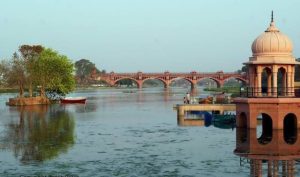
Standing quietly along the Gomti, Chhattar Manzil once echoed with royal footsteps and whispered strategy. Named after the gilded umbrella chhattar that crowned its dome, this palace complex embodied the refinement of the Nawabi imagination. Later, it became a silent witness to political upheaval, serving as an administrative nerve centre during the Revolt of 1857. Today, its corridors are subdued, its splendour softened by time. Grass grows insistently near its foundations, and pigeons claim the cornices. Yet at dusk, when the river reflects a sky in retreat, the palace seems to breathe. One can almost hear silk brushing marble, debates suspended mid-sentence. Chhattar Manzil reminds us that history does not always shout. Sometimes, it simply watches, patient, reflective, and unafraid of being forgotten.
Bibiyapur Kothi: A Palace That Chose Silence
Just beyond the familiar circuits of Lucknow’s heritage, away from manicured lawns, ticket counters, and guided trails, stands Bibiyapur Kothi, a structure that feels less like a monument and more like a memory that refuses to vanish. Built during the reign of Asaf-ud-Daula, Bibiyapur Kothi was conceived as a riverside retreat overlooking the Gomti. It was never meant to rival the grandeur of ceremonial complexes like Bara Imambara. Instead, it belonged to a softer register of Nawabi life, an escape from courtly protocol, a space for repose, poetry, music, and private contemplation. The Gomti flowed close enough for its moods to be felt from the verandahs, and evenings here were once measured in verses and silences rather than state matters.
Time, however, has been unsparing. Today, Bibiyapur Kothi survives in advanced ruin. Walls are fractured, arches collapse mid-gesture, and vegetation has threaded itself patiently through brick and lime. There are no prominent signboards announcing its significance, no steady stream of visitors. Goats wander through what were once private chambers, children play cricket where courtiers may have stood, and the river continues past with practised indifference. Yet this very neglect has given Bibiyapur Kothi a rare, unsettling dignity. Without the gloss of restoration, the structure reveals its bones. Rooms can still be traced by the alignment of broken walls; verandahs are imagined through the curvature of fallen arches. The ruin invites reconstruction not through plaques, but through imagination. At sunset, when the light catches raw brick, and the Gomti turns a muted bronze, the kothi briefly regains coherence as if remembering itself.
Bibiyapur Kothi also captures a recurring truth about Lucknow’s quieter heritage: the fragile balance between survival and disappearance. Officially protected, yet functionally abandoned, it exists in a liminal state. Its greatest threat is not vandalism alone, but forgetting. And yet, it persists, held together by local familiarity, daily passage, and the stubborn endurance of old masonry. In the broader narrative of the city, Bibiyapur Kothi completes an unspoken arc. If the Bara Imambara represents ambition and architectural confidence, and Dilkusha Kothi embodies rupture and loss, Bibiyapur stands for resignation, not defeat, but acceptance. It suggests that not all histories seek revival or applause. Some ask only to be acknowledged, allowed to age, and to remain present in their incompleteness. To stand within its broken walls is to understand that Lucknow’s heritage is not only what has been restored, illuminated, and celebrated. It is also what survives quietly at the margins, unapologetically unfinished, deeply human, and still breathing.
Kudiya Ghat: Where Faith Meets The Flow Of Water
Far from tourist itineraries, Kudiya Ghat is woven into local memory. Long before embankments and promenades, this ghat served as a sacred threshold between city and river. Its stone steps, worn smooth by centuries of bare feet, still remember dawn rituals. Early mornings reveal living heritage: priests murmuring mantras, lamps floating like small constellations on the water, old men offering prayers not for spectacle but for solace. Kingfishers perch briefly before diving. The river carries away whispered hopes. Kudiya Ghat is not monumental; it is intimate. It teaches that heritage can survive quietly, through repetition, belief, and everyday devotion.
Butler Palace: A Colonial Pause In Stone
Hidden behind overgrown lawns near Hazratganj stands Butler Palace, an uneasy chapter of colonial Lucknow. Built in the early twentieth century, it once hosted British officials and soirées echoing imperial confidence. Its European lines sit uneasily against the city’s Awadhi grace. Now fading and largely inaccessible, Butler Palace feels like a conversation paused mid-sentence. Peeling paint and shuttered windows suggest abandonment, yet the structure stands firm. It reminds us that Lucknow’s heritage is layered, shaped by negotiation, contrast, and uneasy coexistence rather than a single narrative
Dilkusha Kothi: The Eloquence of Ruins
Unlike restored monuments, Dilkusha Kothi wears its wounds openly. Built as a hunting lodge inspired by English country houses, it once stood amid manicured gardens, laughter, and leisure. The violence of 1857 reduced it to ruins; it was never rebuilt. Broken arches now frame the sky. Grass creeps across floors where music once played. Visitors instinctively lower their voices, as if sharing a collective grief. Dilkusha Kothi teaches that decay can be eloquent and that loss, too, is part of heritage.
La Martiniere and the Silent Cemetery
Often overshadowed by its institutional fame, La Martiniere College hides quieter stories in its surrounding grounds. Nearby, small colonial cemeteries lie half-forgotten, their inscriptions softened by moss. Lizards warm themselves on tilted headstones, and peepal roots slowly reclaim stone. These spaces remind us that even memory requires tending and that neglect can be as expressive as care.
Vilayati Bagh Christian Cemetery
Tucked quietly near the Gomti, Vilayati Bagh Christian Cemetery is one of Lucknow’s most overlooked historical spaces. Established during the British period, it holds the graves of European soldiers, officials, and civilians who lived and died far from home. Time has softened its presence, headstones tilt gently, inscriptions fade, and trees grow without supervision. Birds, insects, and creeping roots now share space with memory. Unlike formal monuments, the cemetery does not demand attention; it offers reflection. It stands as a silent prelude to Bibiyapur Kothi nearby, linking colonial presence with Nawabi decline in a landscape shaped by quiet endurance.
Kukrail Reserve Forest: Wildness Within the City
Barely nine kilometres from the city centre lies Kukrail Reserve Forest, planned in the 1950s as Lucknow’s green lung. Families picnic here; joggers follow familiar loops. Yet beyond the chatter lies a quieter triumph. Under neem and teak trees flows the Kukrail river. Hidden behind modest fencing is a gharial breeding centre, where long-snouted crocodilians, prehistoric and unreadable, are raised before being released into safer waters. Watching them lie motionless, eyes ancient, it felt astonishing that such creatures survived within city limits. Bulbuls and warblers stitched sound into the canopy. Kukrail is not just a park; it is a living experiment in coexistence.
Nawabganj Bird Sanctuary: Wings Over Water
About forty kilometres from Lucknow, Nawabganj Bird Sanctuary spreads quietly across wetlands and groves. Migratory birds arrive like seasonal punctuation marks, pelicans, painted storks, and bar-headed geese resting mid-journey. Watchtowers creak softly. Fishermen share space with birds, not as intruders but as cohabitants. Here, heritage is not built; it arrives on wings and leaves again.
Sarnath Beyond the Stupa: Where Ruins Become Meadows
Pilgrims arrive at Sarnath to see the Dhamek Stupa, marking the Buddha’s first sermon. Fewer notice the Deer Park that wraps gently around the ruins. Walking among low brick platforms once used by monks, I watched spotted deer step delicately between fallen pillars. Herons stalked the grass. Small mammals darted between stones as though the ruins themselves had exhaled a meadow. Here, archaeology and ecology are inseparable, each lending the other meaning.
Bhitargaon: Terracotta and Time
In Kanpur Dehat stands Bhitargaon Temple, one of North India’s oldest surviving brick temples. Its terracotta panels depict gods, musicians, and everyday life. Cows wander past its walls; children play nearby. Unlike curated monuments, Bhitargaon exists within daily rhythm, reminding us that ancient art can still share space with modern footsteps.
Dudhwa: A Living Archive of Water and Wilderness
Further north, the Terai opens into Dudhwa National Park, part of the larger Dudhwa Tiger Reserve. The forest announces itself not with spectacle but with stillness. Conversation fades as the smell of wet earth takes over. Grasslands and marshes shift with seasonal floods. Kingfishers flash like stained glass over oxbow lakes. Barking deer call through twilight. Rangers speak of floods that erase and recreate habitats yearly. Heritage here is dynamic, written in movement rather than stone.
The Chambal: Heritage Written in Currents
The National Chambal Sanctuary resists easy tourism. Its ravines once discouraged settlement and allowed rare life to persist. At dawn, drifting by boat, a local boatman read bars like scripture. Gharials basked midstream. A brief ripple marked the appearance of a Ganges river dolphin, a curve, then silence. The Chambal felt older than borders, its grammar written in survival. This was living heritage, flowing and fragile.
Katerniaghat Wildlife Sanctuary
Katerniaghat, on the Indo-Nepal border in eastern Uttar Pradesh, is a landscape where forest, river, and silence shape everyday life. Part of the Terai ecosystem, a vital refuge for gharials, turtles, otters, and the elusive Gangetic river dolphin. Dense saal and teak forests shelter deer, leopards, and a rich birdlife that shifts with the seasons. Unlike curated reserves, Katerniaghat feels raw and intimate, where boatmen read currents like memory, and conservation unfolds quietly, through coexistence rather than spectacle.
Quiet Custodians and Everyday Memory
Across these places, a shared temperament emerged: patience. Old tanks that once fed palace gardens now hosted frogs and dragonflies. Ghats dried fishing nets while kingfishers perched like commas in long sentences. An elderly woman near Kukrail gathered neem leaves for home remedies. A Chambal boatman kept mental ledgers of nesting seasons. A Dudhwa ranger spoke softly of orphaned deer checked on at dawn. These were not conservationists in reports, but subtle custodians whose ordinary choices preserved continuity. The phrase “lesser-known” began to trouble me. Lesser-known to whom? To hurried travellers, perhaps. But to those who lived beside these forests and rivers, these places were intimately known and remembered through childhood games, rituals, and cautionary tales. Their heritage was lived, not displayed.
Epilogue: Listening to the Land
On my final evening, under a sky heavy with monsoon promise, I stood by a forgotten oxbow. A raptor circled overhead; a frog called from reeds. Nearby, a child chased a cricket, and an old man mended a net. It was ordinary and profoundly moving. Lucknow and Uttar Pradesh, beyond it, do not reveal themselves all at once.
Some secrets hide behind locked gates, some along forgotten river steps, some within ruins claimed by silence and grass. To truly know them, one must step away from the obvious. Walk softly. Listen carefully. In these quiet spaces, palaces watching rivers, ghats whispering prayers, forests sheltering ancient eyes, the region exhales. And in that exhale lies its truest heritage: a long, unfinished story where culture and conservation are not rivals, but partners.



Leave a comment