

Thinking Point
TreeTake Network
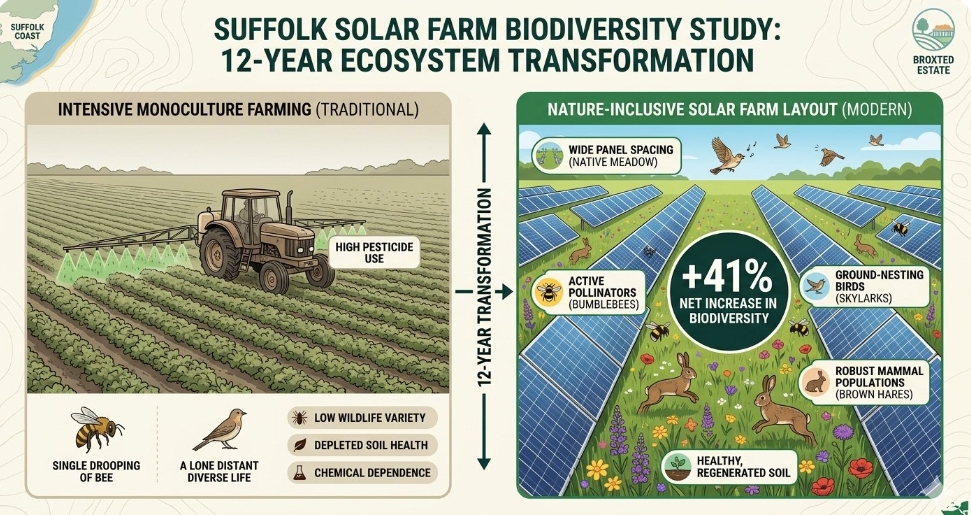
A groundbreaking ecological monitoring project concluded at the Broxted Estate in Suffolk has provided definitive evidence that solar energy sites can actively catalyse the recovery of rural wildlife populations. The exhaustive 12-year field study, conducted by a coalition of independent British ecologists, has documented a remarkable 41% net increase in overall biological diversity across land plots that transitioned from intensive arable farming to solar energy generation, challenging the conventional narrative that renewable energy infrastructure compromises natural landscapes.
The multi-decade assessment systematically tracked shifts in flora and fauna after developers custom-built the infrastructure to feature wide spacing between photovoltaic rows, alongside deep perimeter buffer zones sown exclusively with native wildflower seed mixes. The elimination of synthetic chemical fertilisers and mechanical tilling cycles allowed depleted soils to regenerate naturally. Over time, the site transformed into a thriving haven for species that have suffered devastating losses across traditional British agricultural landscapes, including declining populations of bumblebees, skylarks, and brown hares.
Dr Hannah Bowen, lead ecological monitoring specialist at the Suffolk Biodiversity Trust, detailed the structural transformation observed throughout the project. "When you remove industrial pesticide regimens and actively manage solar installations as protected meadow reserves, the ecosystem responds with incredible speed," Dr Bowen explained. "Our long-term sampling sets prove that these installations can serve a double purpose, functioning concurrently as green power generators and vital ecological sanctuaries that support complex food webs."
The findings are set to directly shape future planning applications across East Anglia, with conservationists using the data to advocate for mandatory nature-inclusive architectural guidelines within all upcoming clean energy tenders.
Alistair Montgomery, senior land use consultant at the British Centre for Agri-Environmental Research, emphasised the strategic implications for international agricultural policy. "This study proves that we do not have to choose between energy security and ecological preservation," Montgomery remarked. "By realigning solar farm layouts to favour wildlife, we can systematically reverse the steep biodiversity losses caused by decades of monoculture farming whilst securing clean electricity for thousands of homes."
Editor's Note
The Broxted Estate study shifts the conversation from viewing solar farms as industrial disruptions to recognising them as powerful tools for ecological restoration. For these gains to be replicated globally, local councils must mandate clear biodiversity net gain thresholds as a core condition for planning approvals. Integrating native meadows, hedgerows, and wildlife corridors into renewable layouts ensures that the global transition to clean energy actively heals the surrounding biosphere.



Leave a comment