

TreeTake Network
Diplomatic delegations from nearly 200 nations have commenced arriving for the preliminary briefings of the 31st Conference of the Parties (COP31) to the United Nations Framework Convention on Climate Change, opening under the shadow of severe institutional warnings. The summit, scheduled to run from November 09 to November 20, 2026, marks a pivotal operational juncture for global climate policy, yet arrives amidst a profound international enforcement crisis.
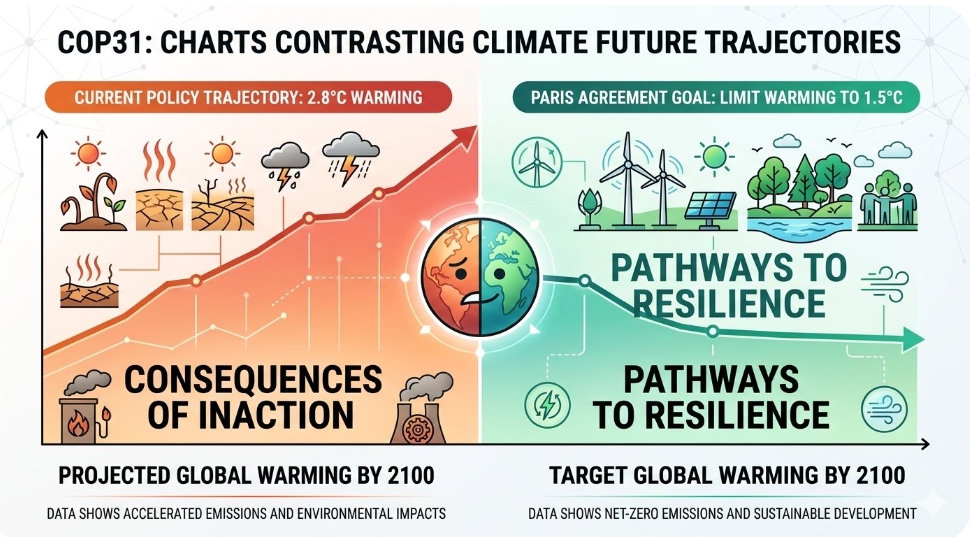
A central point of concern dominating the pre-summit assemblies is the United Nations Environment Programme emissions gap analysis, which explicitly warns that current state policies project global warming to reach 2.8°C this century. This trajectory dramatically overshoots the internationally agreed safety threshold of 1.5°C, prompting urgent calls for immediate legislative acceleration. The pressure is further magnified by the formal withdrawal of the United States from the Paris Agreement at the start of this year, leaving the world's historical top emitter without an official negotiating team on the floor.
Murat Kurum, the nominated COP31 President-Designate, addressed the early assemblies during an implementation framework briefing. "We are no longer negotiating for future ideals; we are fighting to correct a trajectory that leads to 2.8 degrees of warming," Kurum stated. "Antalya must serve as the structural bridge where vague financial dialogues transform into legally binding domestic mandates. Dialogue without execution is no longer an acceptable diplomatic option if we are to favour long-term planetary survival."
The formal agenda is set to be dominated by contentious climate finance structures, specifically targeting the tripling of adaptation funding for lower-income economies by 2035. Translating these macro-targets into measurable asset delivery remains the primary hurdle for negotiators.
Selwin Hart, the United Nations Secretary-General's Special Adviser on Climate Action, voiced sharp criticism regarding the slow pace of state transitions ahead of the opening plenary. "The global community possesses the technological infrastructure required to phase out fossil fuels, yet political inertia continues to compromise progress," Hart remarked. "COP31 cannot repeat the omissions of prior summits. Governments must submit comprehensive domestic roadmaps that directly target emissions reductions or face catastrophic human and economic costs."
Editor's Note
The convergence of international delegates in Antalya occurs at a historical juncture where the gap between climate science and state compliance has reached its widest point. The projected 2.8°C warming trajectory represents a collective systemic failure of voluntary climate pacts. To keep COP31 from becoming another symbolic exercise, the summit must move beyond incremental diplomacy and enforce strict, transparent compliance penalties, along with standardised definitions for adaptation finance.



Leave a comment