

TreeTake Network
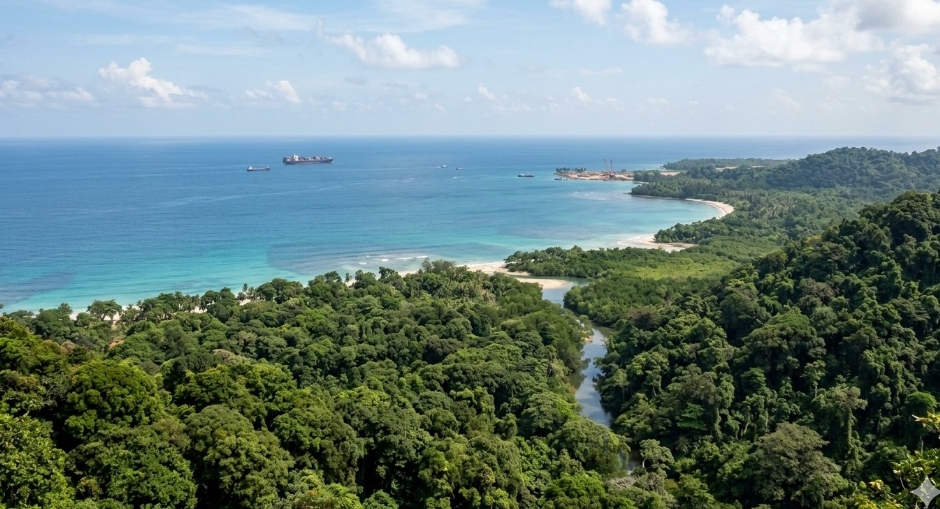
The Supreme Court of India has delivered a landmark environmental ruling by robustly dismissing a Union Government plea that sought to stay provincial high court challenges against the massive Great Nicobar Island strategic development project. The apex court explicitly declared that the preservation of ancient culture and unique ecological heritage is a constitutionally protected fundamental right, thereby shielding the vulnerable Shompen and Nicobarese tribes along with their pristine habitat from imminent industrial encroachment. The legal friction centres on a planned multi-billion-pound infrastructure township, a strategic transhipment port, and an international airport, which would necessitate the direct diversion of over 130 square kilometres of exceptionally diverse tropical rainforest.
Environmental activists and human rights watchdogs have continuously raised intense alarms regarding the irreversible damage this massive construction blueprint would cause to the island’s highly sensitive ecosystem. The area serves as a critical nesting ground for the endangered leatherback sea turtle and houses endemic species found nowhere else on Earth. By allowing the lower court injunctions and petitions to proceed unimpeded, the Supreme Court has effectively prioritised ecological conservation and indigenous tribal sovereignty over immediate commercial and strategic expansion. The ruling mandates a comprehensive, independent re-evaluation of the environmental clearances previously granted by central authorities.
Legal principles and tribal sovereignty
Constitutional experts have hailed the judicial intervention as a defining moment for domestic environmental jurisprudence. The bench emphasised that tribal communities cannot be arbitrarily displaced or disrupted in the name of macroeconomic development without exhaustive, transparent consent and undeniable proof of ecological safety. Legal analysts point out that by anchoring the protection of the Shompen tribe within fundamental constitutional rights, the court has established a strict legal precedent that will heavily restrict how future infrastructure projects are assessed in ecologically sensitive border regions.
In the official court order, the Bench led by Chief Justice of India Surya Kant explicitly observed: "Preservation of culture is a constitutionally protected fundamental right." The apex court strongly questioned the absolute displacement of particularly vulnerable tribal groups, rejecting the state's arguments that strategic considerations should bypass the core rights of the island's original indigenous inhabitants.
Ecological ramifications of the project
The planned infrastructure corridor threatens to fragment one of the last intact tropical rainforest systems in the Indian Ocean. Independent ecological assessments indicate that the construction of the deep-sea port would lead to extensive coral reef bleaching and destroy critical marine habitats. Furthermore, conservationists argue that the influx of thousands of outside workers during the construction phase would introduce catastrophic biosecurity risks to the isolated Shompen population, who possess little immunity to modern illnesses.
Defending the state's massive expenditure and infrastructure framework, the Attorney General of India, R. Venkataramani, argued before the bench that the multi-billion-pound strategic development was an absolute national necessity. However, the judicial review maintained that strategic value does not grant long-term immunity from proper ecological evaluation, marking a major pause on all preliminary forest clearances.
Editor's Note
The Supreme Court's decisive ruling marks a vital turning point in balancing national strategic ambitions with strict ecological preservation. The way forward demands an immediate, absolute pause on all preliminary groundworks to allow an entirely independent panel of international ecologists and anthropologists to conduct a comprehensive carrying-capacity study of the island. True progress must modernise our development frameworks so that irreplaceable natural capital and vulnerable tribal lives are viewed as non-negotiable assets rather than collateral damage for industrial growth.



Leave a comment