

Plants & Pets
TreeTake Network
Integrating lush greenery with beloved companion animals inside modern living spaces is a prominent trend in contemporary interior design and urban lifestyle. Driven by the biophilia hypothesis—the innate human tendency to seek connections with nature—millions of urban residents fill their apartments with indoor plants while simultaneously sharing their lives with dogs, cats, rabbits, and birds. On the surface, this combination creates an idyllic sanctuary, bringing a slice of the natural world indoors. However, beneath the aesthetic appeal lies a complex web of ecological, behavioural, and biochemical interactions.
Understanding the relationship between houseplants and domestic animals requires exploring botany, veterinary toxicology, animal behaviour, and psychological science. When managed correctly, this green-and-pawed coexistence offers substantial mutual benefits, purifying indoor air and providing vital sensory enrichment for domestic animals. Yet, without careful planning and a deep understanding of plant biochemistry, it can lead to hazardous domestic situations.
The shared benefits: Air quality, humidity and microclimates
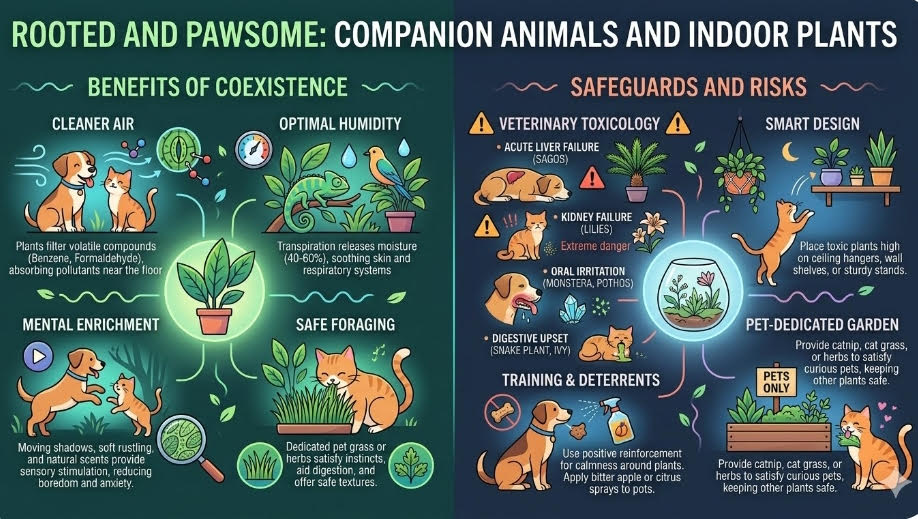
The primary environmental advantage of indoor plants is their ability to actively modify the indoor microclimate, a transformation that directly impacts the respiratory health and daily comfort of companion animals. Modern residential architecture often relies on sealed environments, central air conditioning and synthetic building materials. This combination tends to trap volatile organic compounds like benzene, formaldehyde, and trichloroethylene, which are continuously emitted by carpets, modern furniture, and household cleaning products.
Because domestic pets spend the vast majority of their lives close to the floor, where heavy gaseous pollutants and dust particulates naturally settle, they are highly susceptible to poor indoor air quality. Plants help mitigate this issue through phytoremediation, a natural process where vegetation cleans up polluted environments. Additionally, houseplants act as natural evaporative humidifiers through transpiration.
Plants release moisture into the air, steadily raising indoor humidity levels to a comfortable, stable range of 40% to 60%. This ambient moisture is highly beneficial for domestic pets. For dogs and cats, it helps prevent dry, itchy skin and reduces the occurrence of chronic respiratory irritation or dry coughing caused by artificial winter heating. For exotic birds, mirroring their native tropical environments, optimal humidity levels are critical for maintaining feather elasticity and preventing stress-induced self-plucking. Reptiles and amphibians also benefit significantly, as the ambient moisture helps maintain the ideal humidity required for healthy skin shedding and respiratory function.
The visual and sensory sandbox: Foraging and environmental enrichment
An indoor garden functions as a rich sensory playground for domestic pets, breaking the monotony of indoor confinement. In the wild, the ancestors of dogs and cats navigated diverse landscapes filled with varied textures, shifting scents, and moving shadows. A modern home can sometimes lack this necessary stimulation, leading to behavioural issues like separation anxiety, compulsive grooming, or destructive chewing.
Introducing non-toxic houseplants adds a layer of dynamic complexity to a pet’s environment. A large, non-toxic plant like a Majesty Palm or a Money Tree reacts to indoor air currents, casting moving shadows and rustling softly. This slight movement catches a pet's eye, stimulating natural tracking instincts without causing stress. The soil itself introduces earthy scents that enrich a pet's sense of smell, anchoring them in a more natural environment.
Furthermore, plants provide an excellent opportunity for safe foraging behaviours. Felines, in particular, are strongly drawn to long, blade-like leaves that mimic wild grasses. Providing dedicated, pet-safe plant zones allows animals to satisfy their natural curiosity safely.
The biochemical risk: Navigating veterinary toxicology
While the behavioural and atmospheric benefits of indoor greenery are clear, the introduction of plants also presents a major biochemical challenge: veterinary toxicology. Plants cannot run away from predators, so over millions of years of evolution, they have developed complex chemical defence mechanisms to prevent being eaten. These defence strategies include synthesising bitter alkaloids, accumulating irritating crystals, and producing toxic saponins.
While these chemical defences are perfectly calibrated to deter wild insects and herbivores, they can be highly dangerous to curious domestic pets who lack the instinctual knowledge to avoid exotic houseplants. Veterinary emergency rooms frequently treat pets for accidental plant poisonings, which typically fall into three primary toxicological categories.
The first category involves insoluble calcium oxalate crystals, a defence mechanism found in popular houseplants like Monstera Deliciosa, Pothos, Philodendrons, and Dieffenbachia. These plants contain microscopic, needle-like crystals shaped like tiny spears, called raphides. When an animal bites into a leaf or stem, the pressure causes these crystals to shoot out forcefully into the sensitive tissues of the mouth, tongue, and throat. The immediate result is intense, burning oral pain, visible drooling, and local swelling. While rarely fatal, the acute discomfort can cause significant distress, and severe swelling can occasionally obstruct an animal's airway, requiring immediate medical attention.
The second category involves systemic saponins and glycosides. Found in plants like the Snake Plant and various Ivy species, these compounds act as natural detergents. If swallowed, they disrupt the cellular lining of the stomach and intestines. This irritation leads to gastrointestinal distress, characterised by vomiting, severe diarrhoea, loss of appetite, and lethargy.
The third and most dangerous category involves plants that cause irreversible organ failure. The prime example is the true lily family, which includes Easter Lilies, Stargazer Lilies, and Asiatic Lilies. These plants are exceptionally toxic to felines. Eating even a small piece of a leaf, petal, or licking a few grains of pollen off their fur can cause rapid, irreversible acute kidney failure in cats within 48 to 72 hours. Similarly, the Sago Palm, a popular choice for minimalist interior decor, contains cycasin, a potent toxin that causes severe, acute liver failure in dogs, often proving fatal even with rapid veterinary intervention.
Designing a harmonious indoors: Practical strategies for safe coexistence
Creating a harmonious indoor environment where plants and pets thrive together is entirely achievable through thoughtful plant selection, strategic placement, and positive training. Homeowners do not need to choose between a green home and a pet-filled one; instead, they can design a space that prioritises the safety and well-being of both.
The most effective way to protect toxic or delicate plants from curious pets is to place them well out of reach. Using modern ceiling hangers, high wall-mounted floating shelves, or sturdy heavy-bottomed plant stands allows you to keep vulnerable plants safely elevated. Pets can also be trained to respect indoor greenery through positive reinforcement. When a pet approaches a plant display, rewarding it with a treat for a calm, indifferent response helps build a positive association with leaving the greenery alone. Spraying the outer pots with a diluted mixture of citrus juice or placing bitter apple spray around the base of the plant stand creates a natural sensory boundary that pets will naturally prefer to avoid.
One of the best ways to keep pets away from decorative house plants is to provide them with a garden of their own. Placing a shallow tray of fresh wheatgrass or a pot of catnip in an easily accessible location satisfies their instinct to forage and chew.
A Shared Sanctuary
The relationship between indoor plants and companion animals highlights the balance required when bringing the natural world into our homes. By understanding the air-purifying benefits, sensory opportunities, and toxicological risks of different plants, pet owners can create a beautifully balanced living space.


.jpg?resize=120%2C90&ssl=1)



Leave a comment