

Travelogue
(BALI PASS TREK, SUMMER 1985)
HN Singh
The writer is a Lions International Faculty Member, SPHEEHA, Naturalist, HAM Radio Licensee, trekker & mountaineer
The summer of 1985 remains etched in my memory as one of the most unforgettable periods of my life. It was an era when travel was powered by enthusiasm rather than technology. There were no mobile phones, no GPS devices and very little information available about remote Himalayan trails. Trekking equipment was basic, communication almost non-existent, and adventure depended largely on one's determination and courage. I was 29 years old, living in Lucknow, working hard and saving every possible rupee for my greatest passion: the Himalayas. Four close friends shared the same obsession. During one of our visits to the Indian Mountaineering Foundation library in Delhi, we learned about an exciting and challenging route connecting the beautiful Har Ki Dun Valley with Yamunotri via the high-altitude Bali Pass. An experienced mountaineering instructor warned us, “Bali Pass is not an easy trek.” For a group of young adventurers, that warning sounded more like an invitation.
Journey to the mountains
Our expedition began with an overnight train journey from Lucknow to Dehradun. Family members packed steel tiffin carriers with homemade food, while our rucksacks carried only the essentials. Sleep was impossible. The excitement of the coming adventure filled the railway compartment as we discussed routes, mountains, and dreams. From Dehradun, we boarded a crowded bus bound for Sankri, a small Himalayan village that serves as the gateway to several trekking routes in the Garhwal Himalayas. The winding mountain road followed deep river gorges, passed through dense forests, and occasionally came to a halt because of landslides. By the time we reached Sankri, the modern world felt very far away.
Into the Valley of Gods
The trek began through dense pine and deodar forests. We crossed wooden bridges over icy streams and passed traditional Himalayan villages where smiling children greeted us enthusiastically. The Har Ki Dun Valley appeared like a scene from mythology. Vast alpine meadows stretched beneath towering snow peaks, while crystal-clear streams flowed through the valley floor. At sunrise, the mountains glowed with shades of pink and gold. The valley is often called the ‘Valley of the Gods’. According to local tradition and Hindu mythology, this was the route taken by the Pandavas during their final journey toward heaven. Dominating the skyline stood the mysterious peak of Swargarohini, literally meaning ‘The Stairway to Heaven’. Local belief holds that the Pandavas ascended to heaven through this very region. History and mythology seemed to blend naturally in these mountains. At Osla village, an elderly villager listened quietly as we enthusiastically described our plans to cross Bali Pass. After a thoughtful pause, he smiled and said, "Young men speak loudly before the climb. On the pass, the mountains make everyone silent." We laughed at the time. Later, we would understand.
Ruinsara Tal - The Sacred Lake
Continuing deeper into the valley, we reached the enchanting Ruinsara Tal, situated at an altitude of nearly 11,800 feet. Surrounded by forests and snow-clad peaks, the lake reflected the mountains like a mirror. Ruinsara Tal is not merely a beautiful alpine lake. It occupies a special place in local mythology and is associated with legends dating back to the Mahabharata era. For us trekkers, it also marked the beginning of a different world.
Into the high Himalayas
Beyond Ruinsara Tal, the landscape changed dramatically. Forests disappeared. Meadows gave way to rocky moraines, glaciers and snowfields. The air grew thinner and colder. Every step demanded greater effort. Our canvas tents shook violently in freezing mountain winds. Water bottles froze overnight. Even ordinary tasks such as cooking, packing or tying shoelaces became exhausting.
This was long before organised trekking companies operated regularly in the region. There were no satellite phones, no rescue teams and no marked campsites. We depended on rough maps, local guidance and our own judgment. One afternoon, we crossed a glacier in rope formation, carefully avoiding hidden crevasses. The brilliant sunlight reflected from the snow so intensely that our eyes ached despite our dark glasses. Yet the beauty was overwhelming. At over 14,000 feet, the silence of the Himalayas felt ancient, sacred and alive.
The legacy of Bali Pass
The route we were following had its own fascinating history. Although known to local shepherds and villagers for generations, the modern trekking route over Bali Pass was popularised in the late 1940s by Jack Gibson, a British teacher at The Doon School in Dehradun. An enthusiastic mountaineer and explorer, Gibson led expeditions through these remote valleys and introduced this spectacular crossing to generations of trekkers.
The ascent to Bali Pass
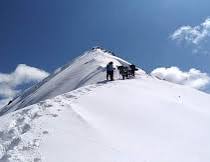
The most demanding day of our expedition began long before sunrise. Under a sky crowded with stars, we left camp and began the final climb toward Bali Pass. Headlamps were uncommon in those days. We relied on small hand torches and moonlight reflected from the snow. The slope was steep and relentless. At such altitudes, progress is measured not in kilometres but in breaths. Ten steps, pause, breathe. Ten more steps and pause again.
The conversation stopped completely. Every climber was alone with his thoughts and determination. As dawn slowly illuminated the eastern horizon, we finally reached Bali Pass, standing at nearly 16,200 feet above sea level. The view was beyond description. Behind us stretched the green beauty of Har Ki Dun and Ruinsara Valley. Ahead lay the stark and rugged landscape descending toward Yamunotri. Snow-covered peaks surrounded us in every direction. The wind roared across the pass, carrying prayer flags against an intensely blue Himalayan sky.
For several minutes, nobody spoke. The old villager's prophecy had come true. The mountains had made us silent. In that extraordinary moment, every hardship—the cold, exhaustion, uncertainty, and fear—simply disappeared. The mountains offered no applause and no rewards. They merely allowed us to stand among them for a brief moment. And that was enough.
Descent towards Yamunotri
The descent proved even more challenging than the ascent. Loose snow and steep slopes tested our tired legs. Several times we slipped while negotiating icy sections. Afternoon clouds rolled in, reducing visibility and increasing the risk of losing the route. Gradually, however, the landscape softened. Eventually, we heard the distant ringing of temple bells from Yamunotri.
The Bali Pass route finally led us to the sacred Yamunotri Temple, one of the four revered Char Dham pilgrimage shrines. Pilgrims looked curiously at us—sunburnt, unshaven and carrying weather-beaten rucksacks repaired with rope and tape. That evening, while soaking our tired feet near the hot springs beside the temple, laughter returned to our group. One friend solemnly announced that he would never again undertake such a difficult trek. Within months, he was planning another Himalayan expedition.
Reflections after four decades
More than forty years have passed since that remarkable journey. Today, roads are better, equipment is lighter and organised trekking expeditions regularly cross Bali Pass. Modern technology has made mountain travel safer and more accessible. Yet whenever I think about the Himalayas, my mind returns to the summer of 1985. Somewhere among those silent peaks, beneath the shadow of Swargarohini, I believe the Himalayas accepted us, not as conquerors, but as humble guests. Even today, that remains the greatest reward of the journey.



Leave a comment