

Travelogue
Jyotsna Kaur Habibullah
The writer is the CEO of Lucknow Farmers Markets
The North East of India is not a destination one simply visits; it is an experience that unfolds like a slow-burning melody, rhythmic and deep. My husband, 16-year-old son and I, a family used to the bustling heritage of Lucknow, undertook the journey to three of the "Seven Sisters"—Nagaland, Meghalaya, and Assam. A deliberate pursuit of slow living, clean air, and the soul-stirring hospitality that defines the frontier of our country. Our journey was made seamless by the warmest of welcomes, hosted by my son’s school friends from Assam, setting the stage for a level of hospitality that redefined our understanding of the word mehmannawazi. We started as parents of friends and ended the trip as warm friends, making many more connections along the way.
The Great Hornbill: Nagaland’s symphony of soil
Our journey began in the rugged, mist-kissed hills of Kohima, where the skies are blue and hearts are clear. We arrived just as the Hornbill Festival was reaching its crescendo at the Naga Heritage Village in Kisama. To call it a festival is an understatement; it is a powerful reclamation of identity. Stepping into the Morungs which represent traditional communal meeting spaces of the various tribes—from the Konyaks with their storied past to the vibrant Angamis—we felt the weight of history. Each Morung was a masterpiece of bamboo and wood, adorned with carvings that tell tales of bravery and community. The atmosphere was electric, a blend of the ancient and modern. In one corner, we watched traditional warriors perform guttural chants that vibrated in our chests; in another, the legendary Naga music scene took over.
Nagaland is the rock capital for a reason. The live bands at the festival didn't play music; they channelled the spirit of the mountains through their electric guitars and their voices. As the sun dipped behind the blue-green ridges, the Hornbill Festival transformed the crisp evening into a high-energy celebration.
The food was a revelation! We sat on low wooden stools, sampling smoked meat cooked with fermented bamboo shoots, greens and yams with the famous Naga chilli chutney. The simplicity of the ingredients—locally foraged greens, slow-cooked meats, and steamed rice—mirrored the Nagas' deep connection to their land. There is a specific kind of fursat (leisure) here, despite the festival’s scale, where a stranger will hand you a cup of warm tea or Zutho (rice beer) as if you were a long-lost cousin.
The blue skies of the matriarch: Shillong’s Winter Tales
From the high ridges of Nagaland, we drove toward the Scotland of the East—Shillong. Crossing into Meghalaya, the landscape shifted from rugged cliffs to rolling emerald hills and azure skies so clear they felt painted. Shillong in early winter is a dream of pastel hues. We arrived just as the Cherry Blossom season was drawing to a close. The fleeting pink petals still clung to the trees, carpeting the streets of a city that feels remarkably different from any other in India. There is an order here, a quiet grace that many attribute to the Khasi matriarchal structure. It is visible in the legendary cleanliness of the streets, the warmth of the people, and the sheer beauty of the public spaces. Seeing women everywhere, from manning petrol pumps and stores, was a joy for me!
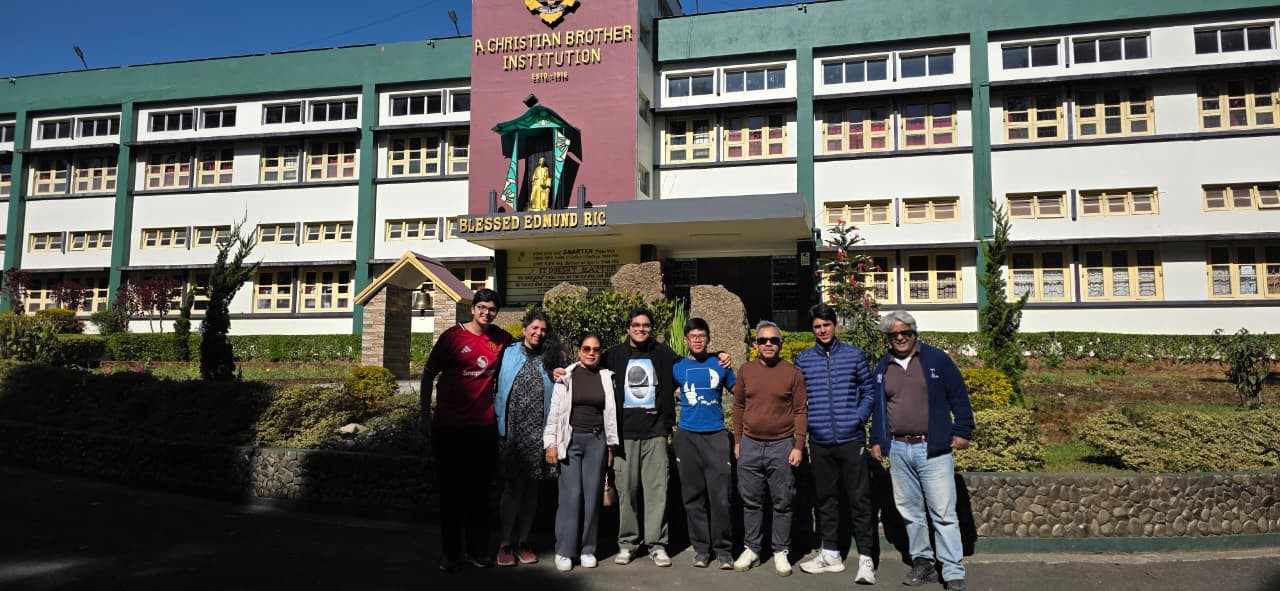
We attended Winter Tales Shillong, a festival that perfectly captures the city's artistic soul. It wasn't just a market; it was a curated exhibition of Khasi craftsmanship, local food, and storytelling. Surrounded by local artisans, we understood that sustainability isn't a buzzword here—it’s a way of life. A visit to St Edmund’s School was a nostalgic highlight, our host is a proud alumnus! Its sprawling green campus and colonial-era architecture stand as a testament to the city’s educational heritage. We stayed in beautiful homestays where the hospitality was personal rather than transactional. Our hosts treated us to the "Shillong lifestyle"—mornings of sun-drenched breakfasts and evenings of soulful live bands performing on hilltops, overlooking a city that glitters brighter than gold.
Descending into the green: Cherrapunji and the Root Bridges
The journey deeper into Meghalaya led us to Sohra (Cherrapunji). The air here is thin and crisp, carrying the scent of rain and wet earth. We embarked on the legendary trek down to the Living Root Bridge. The sight of the bridge—a living, breathing marvel of bio-engineering created by the Khasi elders—is something marvellous to behold. But the adventure didn't end there. The boys took on the Nohkalikai Trek, leading to the edge of the plateau where India’s tallest plunge waterfall thunders down into a turquoise pool. Standing there, with the wind whipping across the grass and the vast plains of Bangladesh visible in the distant haze, the scale of nature’s majesty becomes overwhelming.
We explored the Stalactite and Stalagmite caves, moving through limestone cathedrals carved by water over millions of years. Every corner of Sohra whispered the same message: nature is the architect here; we are merely guests. The food in Sohra—specifically the Jadoh (red rice cooked with meat) and the fresh oranges —provided the fuel we needed for these vertical adventures. Lakadong Turmeric from Meghalaya was my favourite takeaway.
The heart of Karbi Anglong: A wedding in Diphu
Our final leg took us into Assam, to the town of Diphu in the Karbi Anglong district. If Nagaland was about grit and Meghalaya about grace, Diphu was about the warmth of a hearth. We were invited by our friends to experience a local wedding, which turned out to be the emotional soul of our trip. Unlike the choreographed spectacles of the plains, a wedding in Diphu is a communal embrace. The entire neighbourhood seemed to participate in the mehmannawazi (hospitality). We sat under the open sky, surrounded by the sounds of local Karbi bands playing a mix of traditional folk and contemporary melodies. The hospitality was at its best—unpretentious and overflowing. We tried a staggering array of local food: fish steamed in banana leaves, silkworm pupae (a local delicacy), and an endless variety of indigenous foods, small fish, herbs and barks that added layers of flavour we had never experienced.
In Diphu, we realised that the "friend of a friend" culture exists here too, thousands of miles away. Within hours, we weren't "tourists"; we were guests of the family, sharing stories of our homes, inviting them to ours while promising to return.
Reflections from the frontier
As we headed back, leaving behind the blue skies and the sound of distant drums, the Naga Shawls, Jackets and spices we carried meant more than typical holiday souvenirs; they represent a piece of the North East’s resilience. This family trip was a reminder that India’s true beauty lies in these "islands of culture"—places where the matriarch’s wisdom keeps the city clean, where the farmer’s son plays the guitar like a rockstar, and where a wedding invitation is extended to a stranger with a smile that says, "You belong."
The North East Sisters didn't just show us beautiful landscapes; they taught us a new way to breathe. In the quiet of the Morungs, the mist of Nohkalikai, and the laughter of a Diphu wedding, we found a version of India that is sustainable, soulful, and spectacularly alive.
Plan your Travel:
Nagaland: Visit during the first week of December for the Hornbill Festival. Pack woollens.
Meghalaya: Stay in homestays in Upper Shillong for the best experience. The Nohkalikai trek requires a good level of fitness. Visit in early November for the Cherry Blossom Festival.
Assam: Diphu is best experienced through local connections. Don't be afraid to try the local preparations.


Leave a comment