

Talking Point
Shachi Rao
Entrepreneur, environmentalist and social worker
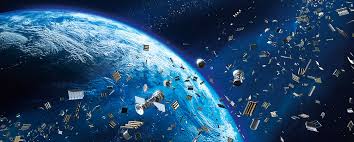
Humanity’s journey to the stars has been one of innovation, wonder, and triumph. From the launch of Sputnik in 1957 to the modern marvels of reusable rockets and Mars rovers, space has become our ultimate frontier. Yet, alongside this progress lies a growing, invisible crisis: space pollution, also known as orbital debris. This isn’t science fiction. Every defunct satellite, every spent rocket stage, and every collision that scatters fragments adds to an expanding cloud of junk around Earth. Today, this debris is not only endangering satellites and astronauts but is also beginning to pollute Earth’s atmosphere and environment. It’s as if Earth has surrounded itself with a junkyard in orbit — a ring not unlike the dangerous asteroid fields Han Solo had to navigate in The Empire Strikes Back.
What exactly is space debris?
Space debris refers to any human-made object in orbit around Earth that no longer serves a useful function. These include defunct satellites, rocket stages left behind after launches, fragments from collisions, and even microscopic particles like paint flakes and metal shards. Travelling at speeds up to 28,000 km/h, even a tiny piece of debris can punch holes in spacecraft.
In the Star Wars universe, damaged starships drift like relics across the galaxy, later picked apart by scavengers like Rey in The Force Awakens. In reality, our own skies are filling with far less glamorous but equally dangerous junk.
The environmental fallout
1. Pollution in the Atmosphere
When debris re-enters Earth’s atmosphere, it burns up. But the process releases vaporised metals such as aluminium oxide, which can linger in the stratosphere and disrupt ozone chemistry.
2. Rocket launch emissions
Rocket launches release soot (black carbon) and gases such as nitrogen oxides. Some solid rocket boosters release chlorine compounds, particularly harmful to the ozone layer.
3. Climate impacts
Black carbon particles trap heat in the atmosphere, while metal oxides from burning debris could alter thermal balances in the stratosphere.
4. Risks to people and Earth
Most debris burn up, but large fragments sometimes survive. They can fall into oceans or onto land, sometimes carrying toxic propellants or heavy metals. Much like the remnants of a destroyed Death Star raining fire across a planet, falling fragments from space can bring dangers back down to Earth
The numbers we cannot ignore
- 1.2 million debris pieces larger than 1 cm are orbiting Earth.
- Over 50,000 larger than 10 cm are being tracked.
- Hundreds of new launches every year add to the growing swarm.
It’s a cosmic junkyard in the making — a scene that would not feel out of place on Tatooine’s scavenger markets.
The Kessler Syndrome: A Death Star in slow motion
NASA scientist Donald Kessler predicted a dangerous scenario: If debris collides with other debris, it creates more fragments, triggering a cascade effect. This could make parts of Earth’s orbit unusable for decades. Think of the Kessler Syndrome as the Death Star of orbital environments — not an instant blast, but a slow, self-sustaining chain reaction. One collision spawns thousands of fragments, multiplying like a dark force, potentially cutting us off from safe passage to the stars.
What can be done?
1. Prevention at the Source: Satellites should be designed to de-orbit safely after their mission. Rockets can use eco-friendly fuels.
2. Active Cleanup: Technologies like drag sails, tethers, robotic arms, and harpoons can remove junk. These robotic janitors are the R2-D2s and BB-8s of our future — real droids dedicated to fixing humanity’s mistakes.
3. Global Cooperation: International guidelines should be enforced more strictly, with shorter end-of-life windows for satellites.
4. Tracking & Monitoring: Improved debris tracking to predict collisions and study atmospheric impacts.
Reusable rockets: A silver lining
Companies like SpaceX and Blue Origin have pioneered reusable launch systems. These reduce waste from discarded rocket stages, making spaceflight both cheaper and more sustainable. It’s the equivalent of a well-maintained starship returning to the hangar bay instead of becoming another piece of wreckage floating through hyperspace.
Why space pollution matters to us on Earth
Satellites are woven into our daily lives: GPS, weather forecasts, TV, financial transactions, and disaster response. Losing satellites would impact everything from flight safety to online banking. Moreover, atmospheric pollution from debris re-entries and rockets could intensify climate change and ozone depletion, directly affecting human health and ecosystems. Like the galaxy in Star Wars — where star systems depend on fragile interconnections — our modern world is more dependent on satellites than most people realise. One orbital catastrophe could ripple through every aspect of life on Earth.
Conclusion: Time to act
Space junk isn’t just an astronaut’s problem; it’s an Earth problem. As we prepare for an era of mega-constellations and more frequent launches, the time to act is now. The solutions are within reach, including smarter satellite design, international regulation, active cleanup, and greener launch systems. The challenge is ensuring governments, companies, and space agencies work together — before the orbital environment becomes a minefield.
The galaxy of Star Wars may be fictional, but its lessons are real: Civilisations that neglect their environments — whether planetary or orbital — risk their future. Space is humanity’s shared heritage. Keeping it clean isn’t optional. It’s our responsibility.



Leave a comment