

Travelogue
H N Singh shares a travelogue from Bhopal to the Queen of Satpura, with history, nature and secrets of the hill
Some journeys begin long before the first step is taken, growing quietly in conversation, in the desire to escape life’s noise and in memories of hills and forests that call from afar. Our trip to Pachmarhi was one such journey: long dreamt of, finally realised one cool afternoon when we packed our bags, some neatly, some hurriedly and set out from Bhopal in our trusted Ambassador car. Two families, four children and endless excitement filled the vehicle. My friend Vinod Agarwal from Allahabad, his wife, their elder daughter and younger son shared the backseat with my own twin boys, a happy riot of chatter, snacks, questions and laughter.
Leaving Bhopal: The road beckons
We left after lunch, as Bhopal shimmered in the mild winter afternoon. The Ambassador hummed steadily along the highway, the children rotating between singing, teasing each other and fighting over window seats. The nearly 200-km journey to Pachmarhi unfolded through open fields, patches of Sal and Teak and the earthy fragrance of freshly harvested crops. As we approached Hoshangabad, the mighty Narmada flowed silently alongside, a calm, ancient companion reminding us how small our journeys are in the vastness of time. A quick tea break revived us, and we moved on towards Pipariya, the gateway to the Satpuras.
Ascending the hills: Into the green silence
After Pipariya, the climb began. The road curved gently through dense forests, sunlight breaking through the tall canopy in golden stripes. The children rolled down the windows to let in the cool pine-scented air. Monkeys watched us from the roadside with the dignified boredom only hill monkeys possess. By the time we reached Pachmarhi, the sun had dipped behind the Satpura ranges, leaving the hill town bathed in soft twilight. And that’s when our real adventure began.
A town full of tourists and guesthouses full of “no vacancy”
Unaware of the seasonal rush, we went from one guest house to another, only to hear the same line: “No rooms, sir. Completely packed.” With four children and two women oscillating between excitement and fatigue, the situation soon became both comical and alarming. The hunt for a room became its own mini-adventure. Just then, destiny intervened in the form of a tea vendor.
“Civil Lines ke us purane bungalow mein poochhiye, sahib. Kabhi-kabhi room mil jaata hai.” There was no signboard and no homestay board, nothing. Just an elegant British-era bungalow hidden behind stone walls. We hesitated, then knocked.
A British-era bungalow and the kindness within
An elderly gentleman opened the door. Soft-spoken and dignified, he listened patiently to our tale of wandering families and full lodges. “I have one room,” he said thoughtfully. “I give it only occasionally. If you can adjust, you may stay.” A wave of relief swept over us. The children whooped with joy. The bungalow was a relic of another time, built by this gentleman’s father during the British period, with wide verandas, tall doors, thick walls and a garden full of hibiscus and bougainvillea. He added with pride: “Pachmarhi is now a No Construction Zone. Old houses like this… they are history themselves.” The single room was simple but clean—and with a little creativity, enough for both families. The children immediately claimed corners as if discovering a new world. That night, resting in the silence of that heritage home, the holiday finally settled into our hearts.
Day One: Falls, forests, and fairytales: Bee Fall — nature’s own shower
The morning greeted us with drifting mist and birdcalls echoing across the valley. Our first stop was the famous Bee Fall, named after the buzzing sound of falling water. The stone-step descent was perfect for the children. When we reached the cascade, it appeared like a shimmering silver curtain over dark rocks. The children ran straight into the spray, shrieking with joy. Vinod laughed: “This is better than any water park and free entertainment!” Bee Fall is one of Pachmarhi’s most popular sites, famous for clean streams, natural pools and the honeybees that gave it its name.
Pandav Caves - Whispers of myth and stone: Next, we visited the legendary Pandav Caves, five rock-cut chambers believed by local tradition to have sheltered the Pandavas during their exile. Though historically of later origin, the caves carry the weight of myth and centuries-old stories. The children climbed every reachable edge, imagining scenes from the Mahabharat.
Exploring Pachmarhi: A land of natural wonders: Pachmarhi is blessed with an astonishing variety of landscapes, valleys, caves, waterfalls and viewpoints that have drawn travellers for generations. Many areas remain pristine due to strict limits on new construction. Some major attractions include:
Waterfalls: Rajat Prapat (Silver Fall) - A tall fall that leaves a silver streak on the rocks. Dutchess Fall – The most remote, reached by a steep trek; famous for Doctor Fish. Apsara Vihar (Fairy Pool) -A gentle cascade forming a beautiful natural pool. Little Fall, Pansy Pool, Picadilly Circus, and Waters Meet. Sacred Caves: Bada Mahadev, Gupt Mahadev Jatashankar -A cave-temple with dripping water and natural formations resembling Shiva’s matted hair. Pachmarhi Church. The Christ Church built in Pachmarhi is an excellent example of British colonial architecture, marking the beginning of changes in this hill station, where the British constructed bungalows and churches in their European style.
Viewpoints & peaks Pachmarhi Hill - Provides a panoramic view of the town. Handi Khoh -A dramatic deep valley. Rajendra Giri - Landscaped gardens with fantastic vistas. Reechgarh -A giant natural cavern.
Day Two: The Chauragarh challenge
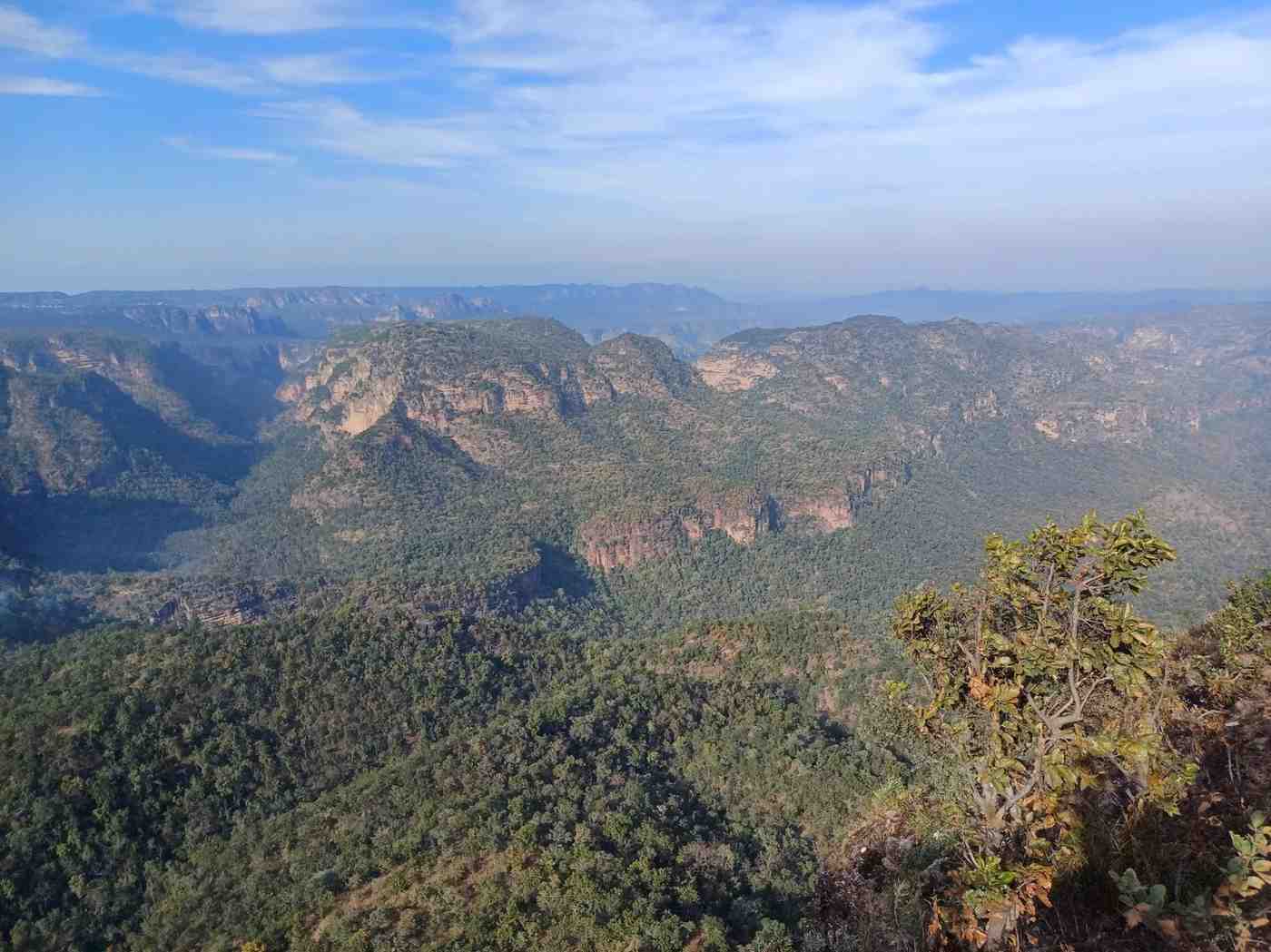
The next day, we braced ourselves for the demanding Chauragarh Temple Trek, famed for its 1,300 steps. The children climbed like mountain goats while we adults puffed behind. Halfway up, one of my twins teased: “Papa, you really need more exercise!” At the summit, the Shiva temple stood proudly among clouds and wind. Around it were thousands of trishuls-devotional offerings from pilgrims who visit in large numbers during Nagpanchami and Mahashivratri. Nearly two lakh trishuls now stand there, creating a forest of faith. Chauragarh is also one of the best spots in Pachmarhi for sunrise viewing. The view, layers upon layers of blue-green Satpura hills fading into the horizon, felt like a reward for every breathless step.
Evenings -Slow, gentle & unforgettable: Evenings in Pachmarhi became our favourite ritual. We wandered the quaint bazaar, ate hot pakoras, bought wooden toys and sipped countless cups of tea. Back at the bungalow, our elderly host sometimes joined us. He spoke lovingly about his father, who built the house, his own years in Bombay and how children brought “energy to old walls.” The kids turned the garden into their nighttime kingdom.
Day 3: Satpura forest trail into the wilderness
We arranged a guided trek along a trail once used by James Forsyth, the explorer who documented these hills. The path wound through deep forest, grasslands and small streams. Our guide spoke of tigers, leopards, and forest lore. The children followed him like eager disciples.
This forest is part of the Satpura Tiger Reserve, home to tigers, leopards, gaur, sambhar, chital, wild dogs, wolves, giant squirrels, flying squirrels and countless birds. By the end, the children were tired but triumphant, each declaring themselves the “bravest explorer.”
Pachmarhi’sliving forest, a biosphere of richness: The Pachmarhi forests are a treasure of biodiversity. They brim with: Mango, jamun, custard apple, local fruits like khatua, tendu, chunna, khinni, chaar Oak and blue pine. Medicinal herbs have been collected by locals for generations.
Dhupgarh: The roof of the Satpuras: At 1,352 m, Dhupgarh is the tallest peak of Madhya Pradesh. Famous for dramatic sunrise and sunset views, it offers night vistas of distant towns like Itarsi.It can be reached both by road and on foot.
Festivals & adventure: Every year from December 25 to 31, the Pachmarhi Utsav brings cultural shows, celebrity performances, exhibitions and New Year celebrations, culminating in an event arranged by Pachmarhi Paryatan Mitra and MARRS. Adventure lovers can enjoy boating, paragliding (seasonal), trekking, rock formations, caving, nature walks and camps at the National Adventure Institute.
A slow, emotional goodbye: On our last morning, a quiet sadness drifted through the air. We packed reluctantly. Our host stood at the gate, smiling softly. “Come again,” he said. “Pachmarhi remembers those who love her.” We left after lunch and reached Bhopal by 8 PM. The hills fell behind us, but the memories travelled with us. In just two days, one going, one returning, Pachmarhi had given us more than many long holidays ever did.
A journey to remember
Pachmarhi is not just a destination, it is an emotion, a place where forests breathe, waterfalls sparkle, old bungalows whisper stories, and time moves gently. For us, the magic was multiplied: one Ambassador car, two families, four exuberant children, a stranger’s rare kindness and moments we will cherish forever. If travel enriches life, this journey enriched us twice, once through what we saw and again through what we felt.



Leave a comment