

TreeTake Network
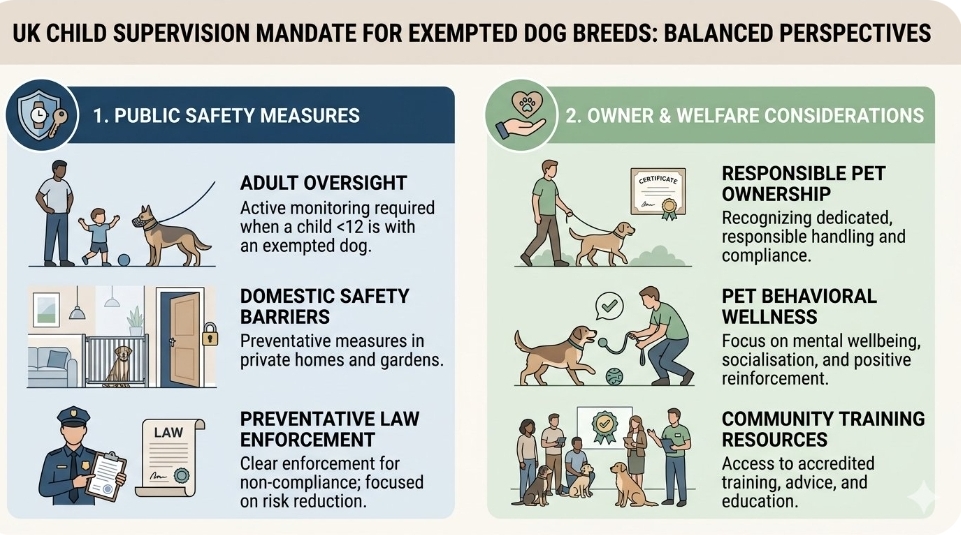
An amendment enacted by the UK Department for Environment, Food and Rural Affairs (Defra) has taken effect on November 01, 2026, introducing legal restrictions for owners of exempted banned dog breeds. Under the new statutory mandate, it is a criminal offence to leave any child under the age of 12 unsupervised with an exempted dog—such as the XL Bully, Pit Bull Terrier, Japanese Tosa, Dogo Argentino, or Fila Brasileiro—inside private residential properties or gardens.
Public Safety Enforcement and Context
The regulation follows multi-year policing data indicating that a significant percentage of severe canine encounters involving young children occur within domestic settings. Enforcement authorities state that the law aims to establish preventative barriers rather than penalising responsible owners.
A Defra public safety spokesperson noted: "While many owners are diligent, the physical capabilities of these specific breeds necessitate mandatory adult oversight to ensure child safety. This amendment addresses a critical gap in domestic safety protocols where unforeseen incidents frequently occur."
Chief Superintendent Richard Evans of the National Police Chiefs' Council added: "Our operational teams respond to devastating incidents that could have been prevented with adult intervention. This law gives police clear statutory backing to ensure high-risk breeds are monitored around minors behind closed doors."
Welfare Concerns and Owner Perspectives
Concurrently, animal welfare organisations and breed-specific advocacy networks have raised concerns regarding the practical application and psychological impact of the mandate. Representatives from the UK Kennel Club and the Dog Control Coalition argue that the law risks further stigmatising specific breeds while overlooking owner behaviour and training quality.
Dr Samantha Green, an animal behaviourist consulting for the Dog Control Coalition, stated: "While child safety is paramount, broad mandates can create operational anxieties for families. Education on canine body language should accompany legislative enforcement, as isolating an animal artificially can induce behavioural stress."
Mark Thompson, a long-time owner of an exempted XL Bully and representative for the Responsible Owners Alliance, expressed community frustration: "We have complied with every registration, muzzling, and neutering rule introduced over the past two years. Treating responsible families like criminals because they leave a dog resting in the same room as a child sets a difficult precedent for pet ownership."
Editor's Note
The implementation of the unsupervised contact law highlights the complex balance between public safety and responsible companion animal ownership. Moving forward, regulatory bodies should pair statutory restrictions with accessible behavioural training resources and public education campaigns to address the root causes of domestic canine incidents effectively.



Leave a comment