

Plants & Pets
TreeTake Network
In the sun-dappled corners of contemporary British sitting rooms, a silent revolution is unfolding. For decades, the columns of horticulturists and the advice pages of veterinary surgeons have maintained a cautious distance. The conventional wisdom passed down through generations of British gardeners has been clear: flora and fauna must be strictly segregated. We are routinely warned about the perils of toxic leaves, the destructive potential of digging claws, and the apparent impossibility of fostering a peaceful coexistence between indoor greenery and domestic animals. However, this binary view completely overlooks a fascinating, rarely touched upon symbiotic relationship that thrives in the modern terrace house and suburban flat alike. When managed with artistic insight and architectural design, the introduction of robust, structural climbing plants—specifically tailored varieties of Hedera helix, commonly known as English ivy—can transform an indoor pet’s environment from a sterile enclosure into a rich, multi-sensory woodland sanctuary.
To suggest introducing English ivy into a home with pets is, admittedly, to invite immediate scrutiny from the local veterinary practice. It is well-documented that the plant contains triterpenoid saponins, which are toxic if consumed in significant quantities. Yet, this is precisely where the traditional column stops and the nuanced reality of animal behaviour begins. Cats and dogs are not indiscriminate grazers; their interactions with the natural world are guided by texture, height, and olfactory curiosity. By shifting our perspective from absolute eradication to strategic architectural integration, we can utilise the vertical climbing habits of ivy to create an elevated biosphere. This canopy remains entirely out of reach from a curious muzzle, whilst simultaneously providing an invaluable psychological anchor for the animals living below. The key lies in understanding that safety is not merely the absence of danger, but the presence of well-designed boundaries that allow life to flourish in all its green complexity.
The psychological plight of the indoor pet is a uniquely modern British phenomenon. Confined to suburban spaces whilst their owners commute to the city, many dogs and cats suffer from a distinct lack of environmental complexity. A room filled with plastic toys and synthetic fabrics offers little comfort to a creature whose ancestors navigated dense undergrowth and rich, earthy terrains. This is where the structural presence of indoor climbing plants alters the domestic landscape completely. A mature ivy plant, trained carefully along an interior brick wall or suspended from a ceiling joist in a heavy macramé planter, introduces a dynamic element of the British countryside into the sitting room. The subtle rustle of leaves caught in a draught, the shifting shadows cast by the afternoon sun, and the distinct, grounding scent of damp compost all work together to satisfy an animal's primal need for sensory stimulation, reducing the repetitive behaviours often born of sheer boredom.
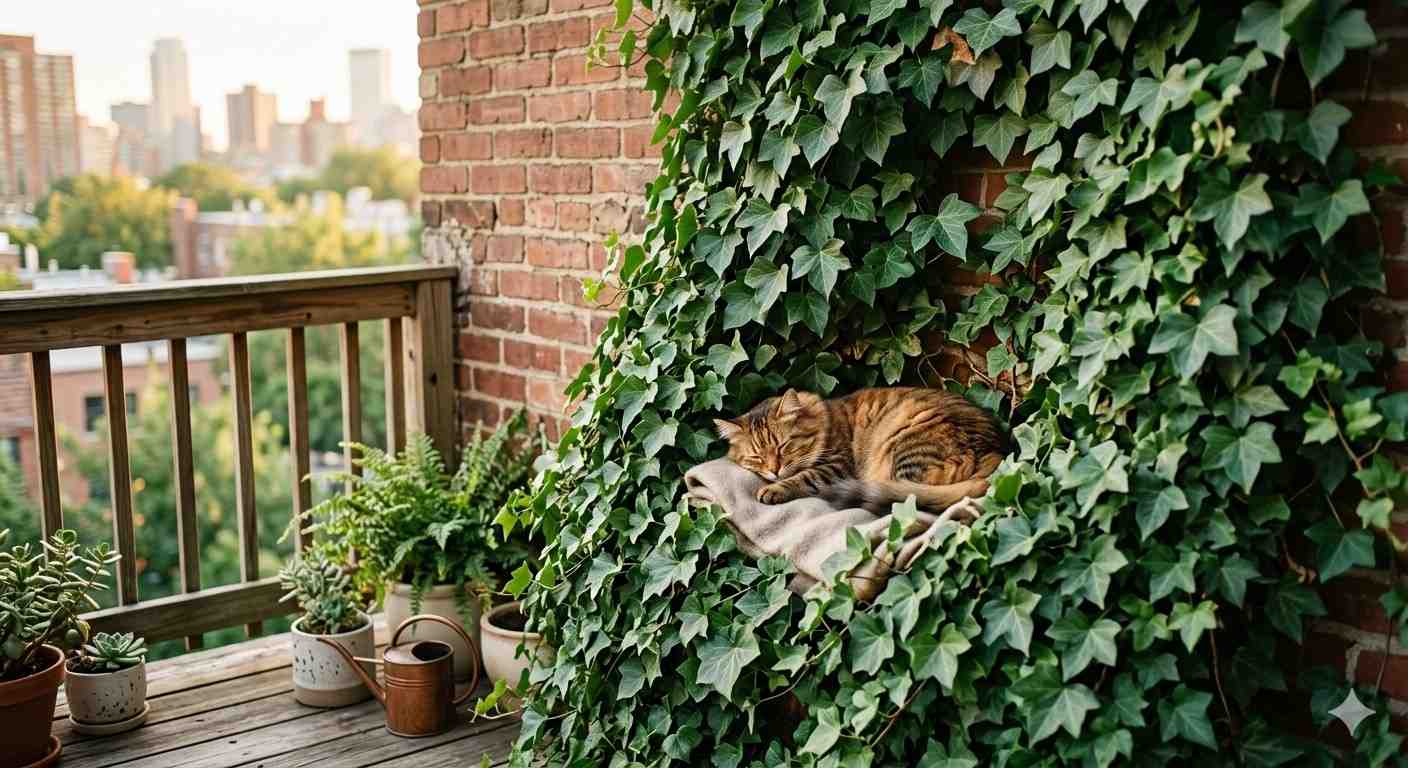
For the indoor feline, the benefits of this vertical greenery are profoundly transformative. Cats are inherently thigmotactic creatures; they derive a deep sense of security from physical contact with close, reassuring structures. In the wild, a cat tracks prey and avoids predators by embedding itself within dense thickets. When we introduce a vertical ivy screen, safely secured behind an elegant wire trellis, we replicate this natural architecture within the home. A cat resting on a high windowsill next to a wall of cascading green leaves is not merely sitting; it is hiding in plain sight. The plant acts as a natural visual shield, reducing the animal’s anxiety by blocking the direct glare of passing traffic or the sight of the neighbour’s assertive tomcat. The feline is enveloped in a living microclimate that dampens harsh household acoustics and provides a dappled, soothing light ideal for long afternoon naps.
Canine companions benefit from this botanical integration in equally subtle, though distinct, ways. Dogs are intensely olfactory creatures, viewing the world through a complex tapestry of scents. A home devoid of natural flora can become a sensory desert for a dog, leading to chronic lethargy or mild depression. While a dog cannot, and should not, chew on the ivy, the presence of the plant significantly alters the indoor air profile. Ivy is celebrated for its ability to filter airborne mould spores and common household toxins. For breeds prone to respiratory sensitivities or skin allergies, this natural filtration creates a cleaner, more comfortable living space. Furthermore, the earthy aroma of the soil and the plant itself provides a subtle, constant connection to the outdoor world, anchoring the dog’s senses and offering a calming influence during stressful moments like thunderstorms or loud firework displays.
The successful implementation of a pet-safe botanical canopy requires a deliberate approach to interior cultivation. It demands that we move away from low-level pots on the carpet and embrace the architecture of the walls. Using heavy-duty, wall-mounted rawlplugs and bespoke timber trellises, an ivy plant can be encouraged to scale the heights of a room, keeping the vulnerable lower vines neatly pruned or tucked behind protective panels. The soil itself, often a target for an inquisitive terrier looking to dig, can be secured beneath a layer of large, heavy river pebbles or a custom-fitted mesh guard. This ensures the roots remain undisturbed while preventing any accidental ingestion of the compost. By elevating the plant, the homeowner creates a striking visual feature that enhances the room's aesthetic while keeping the toxic elements entirely isolated from the pets.
Furthermore, this botanical method revives a historical British architectural tradition, skilfully adapting it for the modern urban era. Historically, Victorian glasshouses and grand conservatories seamlessly blended exotic flora with domestic life, though rarely with animal welfare in mind. By intentionally repurposing these climbing plants today, we are updating a classic design aesthetic to serve a functional, psychological purpose. It represents a mindful shift from purely ornamental gardening to purposeful ecosystem creation within the home, establishing a sustainable template that pet owners can easily replicate everywhere. Splendid.
Beyond the physical boundaries of the living room, this approach challenges the way we think about companion animals and the natural world. We have become accustomed to sterilising our pets' environments in the name of safety, replacing the vibrant, chaotic textures of nature with wipe-clean surfaces and engineered plastic. In doing so, we have inadvertently detached them from the very environments they were evolved to navigate. Integrating controlled, vertical greenery allows us to strike a delicate balance between absolute safety and sensory deprivation. It acknowledges that a pet’s well-being is not merely a matter of nutrition and veterinary checks, but also of environmental richness. The presence of a living canopy restores a fraction of the wild British landscape to the domestic sphere, turning a simple room into a shared sanctuary.
Ultimately, the intersection of indoor botany and pet ownership does not have to be defined by fear and restriction. By understanding the specific habits of our animals and exploiting the natural growth patterns of robust climbers like English ivy, we can craft spaces that cater to the needs of both species. The vertical canopy stands as a testament to the fact that with proper planning, architectural ingenuity, and a deep respect for animal psychology, our homes can become vibrant, living ecosystems. As the afternoon light fades across the sitting room, casting long, intricate shadows of ivy leaves over a sleeping spaniel, the true value of this approach becomes clear. It is a quiet, green sanctuary where the boundaries between the indoors and the natural world beautifully blur, proving that plants and pets can truly thrive together in modern Britain.



Leave a comment