

TreeTake Network
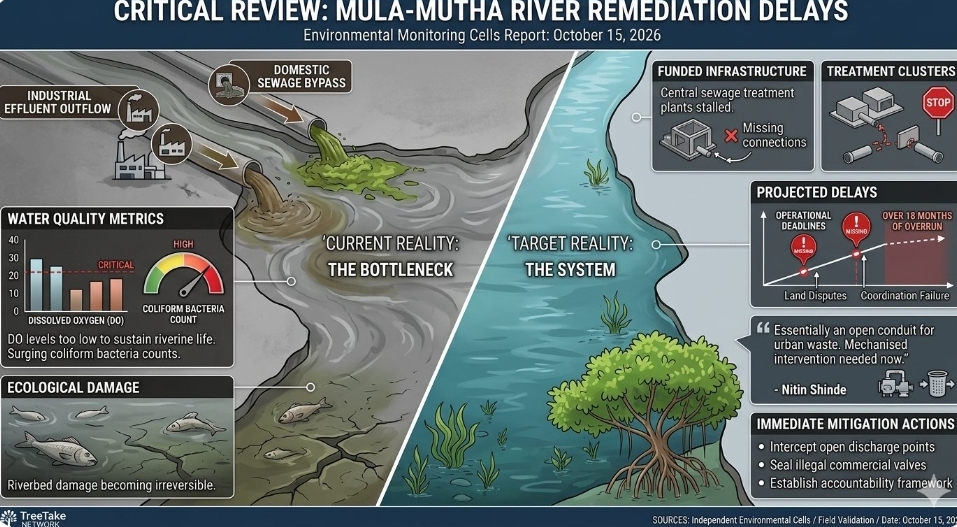
Environmental monitoring cells on October 15, 2026, issued a comprehensive status report detailing severe infrastructure delays and mounting pollution levels along Pune's critical twin river stretch. The technical audit reveals that despite massive capital allocations for municipal treatment facilities, a significant volume of untreated industrial effluent and domestic sewage continues to bypass the city's network, severely degrading the downstream aquatic ecosystem.
Water sample analyses conducted at multiple high-risk junctions indicate that dissolved oxygen levels have dropped well below the critical threshold required to sustain native riverine life, while coliform bacteria counts have surged. "The structural delays in commissioning the central sewage treatment plants mean that the river is essentially being used as an open conduit for urban waste," stated Nitin Shinde, a senior water quality analyst participating in the independent review cell. "Without immediate mechanised intervention to intercept these major missing links in the drainage pipelines, the ecological damage to the riverbed will become entirely irreversible."
The review highlights that key infrastructure milestones funded through international development partnerships have missed their operational deadlines by over eighteen months due to complex land acquisition disputes and municipal coordination failures. "We cannot rely on piecemeal clean-up drives when the foundational infrastructure remains incomplete," noted environmental engineering consultant Dr Kavita Rao. "The municipal corporation must establish a highly synchronised, weekly accountability framework to fast-track the remaining engineering pipelines and seal illegal commercial discharge valves."
Local river conservation coalitions are urging regulatory bodies to impose heavy financial penalties on defaulting civic departments to enforce compliance. The report concludes that a successful reclamation of the river basin depends entirely on establishing decentralised treatment clusters and enforcing a zero-tolerance policy against unauthorised industrial dumping along the upper tributaries.
Editor's Note: The critical bottlenecks identified in the Mula Mutha remediation review underscore the systemic failures of top-down municipal project execution. Moving forward, restoring urban river health requires transitioning toward strict, legally binding timelines backed by independent, third-party engineering audits and transparent public data disclosures to ensure civic accountability.



Leave a comment