

TreeTake Network
The massive expansion of industrial digital infrastructure across the southwestern United States has triggered severe environmental friction today, Oct 14, as newly approved facility permits threaten to derail binding state greenhouse gas reduction goals. State environmental tracking reviews in both New Mexico and Texas indicate that the unprecedented electricity and resource consumption of next-generation data infrastructure is directly undermining regional transitions toward carbon neutrality.
Skyrocketing Industrial Emissions Counteract Green Progress
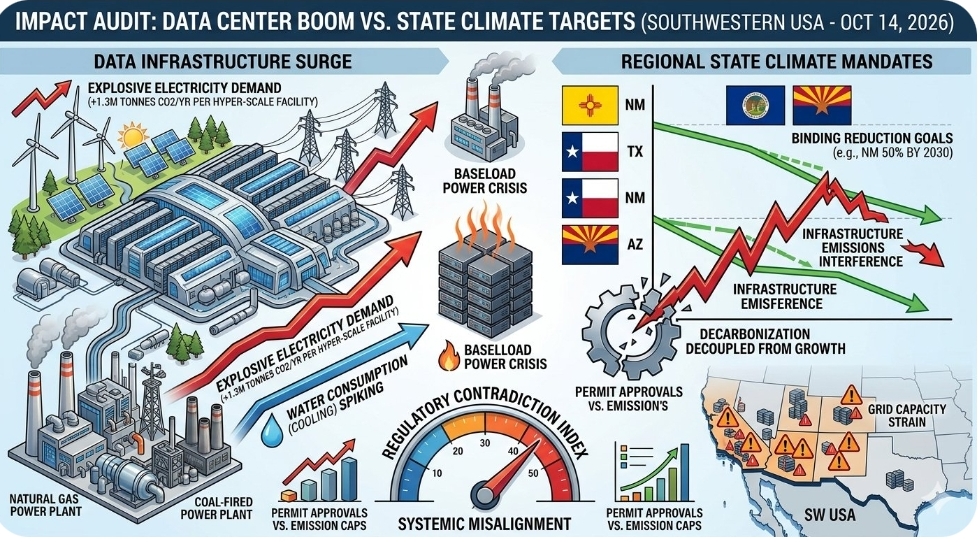
Comprehensive atmospheric impact assessments conducted by regional grid operators show that individual massive data infrastructure installations are now projected to generate up to 1.3 million tonnes of carbon dioxide emissions annually. This surge is primarily driven by the continuous, high-intensity baseload power demands required to operate hyper-scale processing servers and their associated cooling networks, forcing utility grids to extend the operational lifespan of legacy fossil-fuel power plants.
In New Mexico, where statutory mandates require a 50 per cent reduction in greenhouse gas emissions by 2030 compared to 2005 levels, the sheer volume of newly authorised industrial infrastructure applications has effectively neutralised recent utility-scale solar and wind additions. Environmental regulators note that a single newly planned industrial infrastructure cluster can consume more power than all the residential properties in a major metropolitan municipality combined, placing an unsustainable burden on local energy and water resources.
Tech Expansion Clashes With Binding Legal Mandates
Conservation advocates and state grid analysts have warned that the current pace of structural development creates a direct regulatory contradiction, where economic zoning approvals are moving in absolute opposition to established statutory climate laws.
"We are witnessing an unprecedented structural misalignment where the carbon footprint of individual technological facilities is actively outpacing our state's capacity to deploy renewable generation," stated Elena Trevino, lead climate policy analyst at the Southwestern Clean Energy Alliance. "Governments cannot honor their legal commitments to decarbonise while simultaneously granting unrestricted permits to hyper-scale infrastructure that locks in decades of intensive, fossil-fuel-dependent baseload consumption. Without strict statutory efficiency caps, our broader regional climate targets will be rendered mathematically impossible to achieve."
Editor's Note
The escalating conflict between digital infrastructure expansion and state climate targets exposes a fundamental flaw in modern grid management. For years, regional administrations have assumed that clean energy additions would steadily displace fossil fuels, but this model fails when an entire sector introduces an insatiable, non-negotiable demand for continuous baseload power. The path forward demands that state utilities implement mandatory 'additionality' protocols, legally requiring all hyper-scale infrastructure operators to fully finance and construct new, dedicated renewable storage assets before drawing power from the public grid. Until technological growth is strictly bound to local ecological carrying capacities, the digital economy will continue to expand at the direct expense of physical climate stability.



Leave a comment