

TreeTake Network
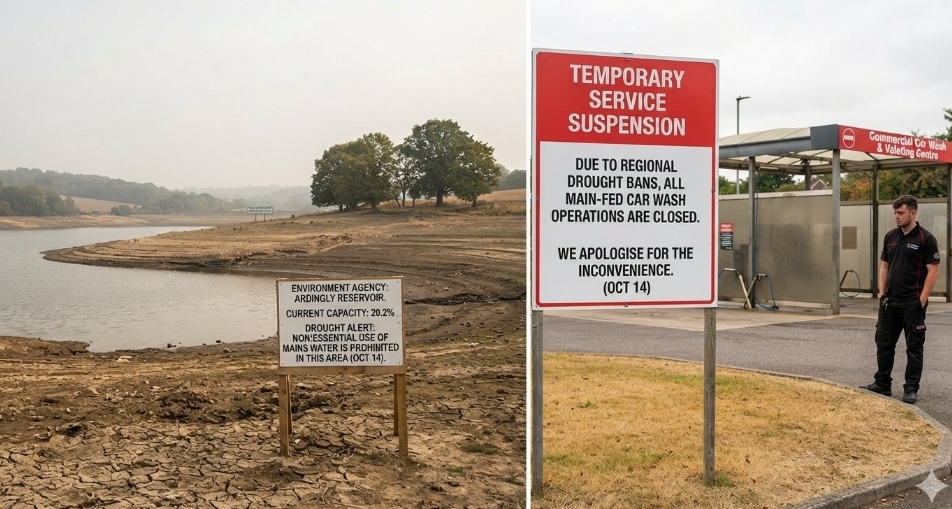
Three major water utilities in England have launched formal applications to enforce sweeping commercial water bans today, Oct 14, putting businesses under direct regulatory pressure as the country faces prolonged drought conditions. The applications seek to legally restrict main water consumption for golf courses, commercial car washes, and private school playing fields across several vulnerable southern and western districts.
Reservoirs Dwindle and Regions Enter Drought
According to the latest data compiled by the Environment Agency, average autumn reservoir capacity across England has plummeted to just 54 per cent, marking a severe 21 per cent deficit below the historic seasonal norm. The situation escalated further when Yorkshire was officially moved into drought status, joining ten other regions in England and Wales that remain designated under emergency drought classifications following an exceptionally parched spring and summer cycle.
The requested non-essential use bans aim to bridge the legal gap that historically protected commercial operations from the standard hosepipe restrictions currently affecting roughly 30 million domestic consumers. The water providers—South East Water, Southern Water, and South West Water—have submitted their emergency dossiers directly to the Department for Environment, Food and Rural Affairs for urgent ministerial clearance.
Extreme Resource Depletion Triggers Last Resort
The emergency measures have been described by utility leaders as unavoidable interventions to preserve collapsing aquatic ecosystems and secure essential drinking water reserves. Officials noted that some critical infrastructure, such as Ardingly Reservoir in West Sussex, has experienced severe depletion, dropping down to 20.2 per cent capacity, threatening local towns with absolute supply failure if dry weather persists through the winter months.
"We do not want to impact businesses, but this is a last resort," stated Sam Bottomley, director for drinking water services at South West Water, explaining the urgent context behind the application. "Reservoirs just have not recovered, and these non-essential use bans represent a thoroughly responsible step to help protect the environment and preserve the remaining water we have available."
Editor's Note: The unprecedented move to restrict commercial enterprise highlights the systemic vulnerability of the United Kingdom's water infrastructure to accelerated climate patterns. While domestic hosepipe bans have marginally flattened demand curves, the reliance on reactive, emergency legislation exposes a failure to normalise long-term water conservation metrics. The sustainable path forward requires a rigorous, state-prioritised restructuring of supply infrastructure, including the immediate fast-tracking of planned regional reservoirs and a heavy legal crackdown on supply-line leakages. Until structural resilience is prioritised over short-term crisis management, expanding urban centres and natural river habitats will face an escalating threat of seasonal dehydration.



Leave a comment