

TreeTake Network
The National Zoological Park in Delhi has implemented an intensive, specialised veterinary monitoring strategy across its big cat enclosures following severe breeding challenges and cub mortality within its captive Royal Bengal tiger population. The emergency administrative overhaul introduces continuous microclimate tracking and diagnostic biological testing pipelines to counter neonatal infections and thermal stress factors affecting vulnerable captive-born offspring.
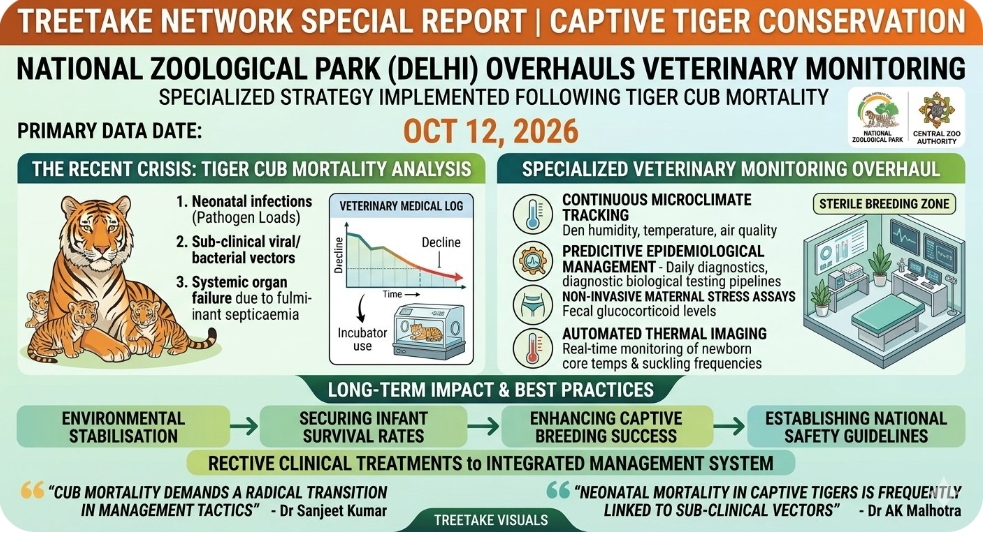
The comprehensive health intervention, mandated on Oct 12, 2026, follows a detailed post-mortem evaluation of the deceased neonates. The specialised strategy shifts the zoo's veterinary protocol from traditional reactive clinical treatments to an integrated, predictive epidemiological management system designed to secure infant survival rates.
Advanced Diagnostic Networks and Environmental Stabilisation
Captive breeding programs for large carnivores face significant challenges due to the extreme susceptibility of newborns to environmental pathogen loads and sudden temperature fluctuations. The updated protocol establishes hermetically controlled maternity dens equipped with automated air purification units and real-time biometric sensors to continuously track ambient humidity and nesting conditions.
An official medical log from the sanctuary veterinary team detailed the immediate clinical timeline, noting that the infants showed acute symptoms of lethargy at 10:15 AM, followed by rapid respiratory distress, and despite the immediate administration of neonatal incubators and broad-spectrum antimicrobial therapies, systemic organ failure occurred by 04:30 PM due to unprecedented fulminant bacterial septicaemia.
Dr Sanjeet Kumar, the Director of the National Zoological Park, detailed the rigorous operational changes, stating that the recent cub mortality demands a radical transition in our management tactics, forcing us to establish a permanent sterile zone around the breeding enclosures. He added that the team is now conducting daily non-invasive faecal glucocorticoid assays to measure maternal stress levels, ensuring that excessive noise and visitor foot traffic do not inadvertently disrupt early nursing periods or suppress the immune systems of vulnerable cubs.
Dr AK Malhotra, a prominent wildlife veterinarian specialising in captive carnivore management, commented on the technical upgrades, stating that neonatal mortality in captive tigers is frequently linked to sub-clinical viral or bacterial vectors that escape standard visual inspections. He emphasised that by integrating automated thermal imaging cameras directly into the den walls, field vets can now monitor newborn core temperatures and suckling frequencies 24 hours a day without physically entering the enclosures and inducing maternal aggression.
Adding to the conservation directive, senior veterinary research officer Dr Devender Singh stated that the implementation of this real-time diagnostic pipeline marks a turning point for ex-situ conservation projects across the region. He added that the data gathered from these high-security maternity dens will be shared directly with the Central Zoo Authority to update national safety guidelines, ensuring that no captive breeding facility operates without automated environmental controls during critical birthing windows.
Editor's Note
The implementation of the specialised monitoring strategy at the Delhi Zoo highlights a critical evolution in ex-situ conservation, demonstrating that successful captive breeding requires a total technological commitment to microenvironmental stability and neonatal epidemiology. The way forward requires the Central Zoo Authority to mandate these automated thermal networks and sterile diagnostic baselines as a compulsory operational standard across all national zoological facilities housing endangered apex predators.


.jpg?resize=120%2C90&ssl=1)



Leave a comment