

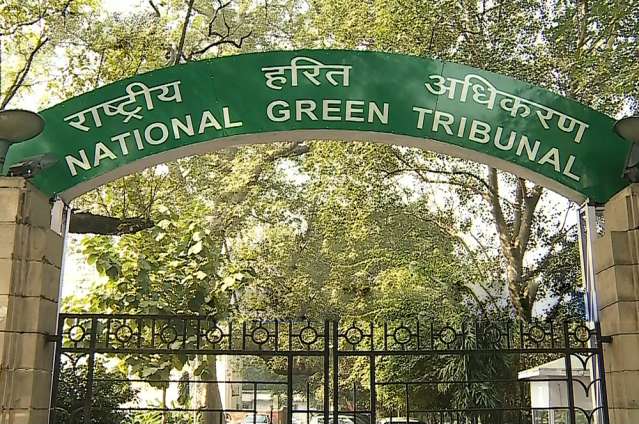
The institutional boundary lines governing urban environmental compliance have fractured into a severe regulatory standoff in the national capital. The National Green Tribunal has issued a blistering administrative censure to the Delhi Pollution Control Committee over its systemic failure to recover massive outstanding environmental compensation penalties from violating industrial units. Alleging that the local watchdog has actively digitised unverified compliance reports while allowing hundreds of polluting factories to operate without functional effluent treatment layouts, the apex green tribunal has ordered an immediate audit of the capital's environmental accounts. TreeTake presents a detailed operational report on this administrative showdown, exploring how the tribunal aims to dismantle local enforcement lethargy, enforce the Polluter Pays Principle, and clean up the region's toxic industrial discharges.
The Institutional Censure and Accountability Failures
The operational parameters governing how state pollution boards operate faced a significant judicial intervention as the National Green Tribunal, led by a principal bench in New Delhi, evaluated the long-term fine collection registries of the state capital. The regulatory inquiry exposed a staggering gap between the statutory environmental compensation penalties initially levied against defaulting manufacturing units and the actual financial recoveries registered in municipal treasuries. The tribunal's records map out severe, long-standing collection delays, revealing that hundreds of millions of rupees in environmental damages remain completely uncollected due to continuous bureaucratic shifting of responsibility and institutional inertia.
The core of the judicial frustration turns on the local committee's practice of accepting unverified self-reported compliance statements from industrial clusters without executing physical, data-verified field audits. The tribunal noted that by relying on obsolete tracking mechanisms, the local watchdog effectively provided an administrative shield for polluting enterprises to bypass waste management rules. "We are tracking a deeply disturbing pattern where statutory environmental penalties are reduced to mere paper threats while the ground-level contamination of urban water tables continues completely unchecked," stated a senior judicial member of the National Green Tribunal during the principal bench proceedings. He emphasised that the watchdog's failure to execute swift recovery measures creates a severe moral hazard, rendering the Polluter Pays Principle entirely decorative. "We are ordering an independent audit of all outstanding environmental funds and will hold municipal officers personally accountable under environmental protection acts for failing to secure these public restoration assets."
Industrial Evasion and the Data Suppression Mask
The enforcement bottleneck is aggravated by a structural failure within regional municipal bodies to accurately monitor and regulate the live discharge vectors of small-scale industrial units operating inside peri-urban borders. Independent researchers utilising automated water quality telemetry have demonstrated that while the watchdog's official portal shows near-perfect compliance indices, the ambient toxic load entering local open drains remains critically high. By maintaining these unverified industrial units under compliant headings in local ledgers, the administration has systematically masked the structural decay of the capital's aquatic ecosystems.
The publication of the tribunal's severe reprimand drew quick, defensive arguments from local administrative directors, who maintain that modern urban industrial zones incorporate adequate treatment setups. Watchdog representatives argue that rapid population growth and shifting manufacturing zones present immense logistical monitoring hurdles, and assert that major enforcement sweeps proceed subject to resource availability. "Every major industrial cluster undergoes a multi-layered regulatory review process, but enforcing absolute compliance across thousands of decentralised micro-enterprises requires a level of field deployment that exceeds our current structural capacity," argued a senior technical director attached to the regional pollution control committee. He rejected allegations of deliberate data suppression, claiming that the administration remains fully committed to progressive modernisation. "We are balancing the massive, inevitable economic demands of a fast-growing capital with responsible environmental planning, and our teams are working to upgrade our live database tracking lines to satisfy the tribunal's newest transparency mandates."
Strategic Paths to Watchdog Self-Reliance
Dismantling the systemic failures gridlocking local environmental management requires an immediate rewrite of urban governance protocols. First, the Ministry of Environment, Forest and Climate Change must strip local committees of the power to manually process industrial compliance data, transferring all monitoring inputs to a centralised, blockchain-backed National Environmental Compliance Registry that automatically flags unauthorised discharges. Second, the judiciary must legally mandate that all pending environmental compensation fines be automatically recovered as land revenue arrears through fast-track fiscal channels, blocking corporate entities from using protracted legal appeals to freeze public environmental restoration funds. Finally, the state must establish a dedicated, independent Environmental Enforcement Wing equipped with high-resolution multispectral remote sensing and live drainage telemetry, ensuring that industrial effluent tracking is managed through hard terrestrial science rather than compromised municipal paperwork.



Leave a comment