

Expert Expressions
Dr CP Rajendran is an adjunct professor at the National Institute of Advanced Sciences, Bengaluru, and co-author of the book: The Rumbling Earth – The Story of Indian Earthquakes
The theme for Mountain Day 2025 (December 11) was "Mountains and Climate Change: Adapting to a Changing World," focusing on glacier retreat, water resources, and sustainable development. In line with this, India and the UN are celebrating the day with themes centred on protecting glaciers, safeguarding mountain water towers, and restoring fragile mountain ecosystems. However, celebration alone will not be enough. Our mountains are under severe ecological stress, and greater emphasis is needed on concrete actions.
Mountains are remarkable reservoirs of biodiversity. Despite covering just 27 per cent of the world’s land area, they contribute disproportionately to the planet’s biological wealth. Harsh climates, high altitudes, and relative isolation have fostered unique evolutionary pathways, while the rich linguistic and cultural diversity of their human communities further enriches these landscapes. Mountains also serve as the world’s vital water towers, supplying 60–80% of the planet’s accessible freshwater. Their ecosystems provide essential services—from food and clean energy to climate regulation—upon which at least half of humanity depends for survival.
Glaciers in mountain ranges worldwide are retreating or disappearing due to climate change. In recent decades, at least 600 glaciers have vanished entirely, disrupting the water supply upon which billions of downstream inhabitants depend. In Pakistan, for instance, meltwater from the Hindu Kush Himalayas provides 80% of the irrigation water for the 180 million people in the Indus River Basin. Similarly, agriculture accounts for nearly 90% of the water used in India’s Ganga River Basin.
The ongoing glacial retreat is reducing the flow of the Ganges and Indus Rivers, which will severely curtail water availability for irrigation and diminish future food production. Compounding this crisis, the long-term, unsustainable extraction of groundwater across the Ganges Basin has already significantly depleted river flows. Furthermore, this hydrological disruption is altering regional climate patterns, contributing to decreased rainfall across the basin. India is graced by major mountain ranges—the Himalayas, the Sahyadri, the Aravalli, and the Vindhyas—each of which rose and receded during different geological eras, with the Himalayas being the most recent to emerge. Consider a scenario without this Great Northern Barrier.
Without the Himalayas to block the frigid winds from Siberia, northern India would likely become a cold, arid desert. The mountains also play a crucial role in monsoon dynamics, forcing moist air from the Indian Ocean to ascend and release precipitation. In their absence, these moisture-laden winds would sweep uninterrupted across the subcontinent into Central Asia, leaving the plains below desiccated. Furthermore, the mighty rivers born of Himalayan glaciers—the Ganges, Indus, and Brahmaputra—would cease to exist, fundamentally altering the region's hydrology and ecology.
The Himalayas constitute a dynamic and ever-changing landscape. Shaped over millions of years by the immense compressive forces of the Indian Plate colliding with the Eurasian Plate, the range bears profound tectonic stress. Its dramatic form emerged from the tension between these tectonic forces and powerful climatic processes. The mountains rise due to ongoing tectonic convergence, while the erosive power of the annual monsoon and seasonal rains continuously counterbalances their growth. This creates a dynamic equilibrium between the vertical forces that uplift the range and the opposing forces that wear it down.
This geological reality underpins the axiom that "without the Himalayas, there is no India." The range is fundamental to the subcontinent's existence. Beyond providing critical water resources and unparalleled biodiversity, the Himalayas have made India a fertile and habitable land, while also forging a distinct cultural identity rooted in its majestic presence.
This principle also holds for regions like Kerala and the other states along the western coast, which is defined by the presence of the Sahyadri range—the Western Ghats. Older than the Himalayas, these mountains are of profound biophysical and ecological significance. Their high-elevation forest ecosystems actively shape the Indian monsoon climate and harbour exceptional levels of biodiversity and endemic species. As a result, the Western Ghats are recognised as one of the world's eight major biodiversity "hotspots." This region provides critical habitat for at least 325 globally threatened species of flora, fauna, birds, amphibians, reptiles, and fish.
The exceptional biodiversity of the Western Ghats is a product of its deep geological history. Speciation in the region is linked to three major events: the breakup of Gondwanaland in the early Jurassic, India's subsequent period of isolation as a continental mass, and its later fusion with Eurasia. Furthermore, the region's favourable weather patterns and steep topographic gradients have provided ideal conditions for the emergence of new species.
However, this unique ecosystem faces significant threats. Widespread fluctuations in rainfall are already reducing water flow from the mountains, jeopardising the future of the region's river systems. This hydrological stress will be compounded by the hundreds of dams planned for the Himalayan foothills and the Western Ghats themselves, which will further alter river flows over time.
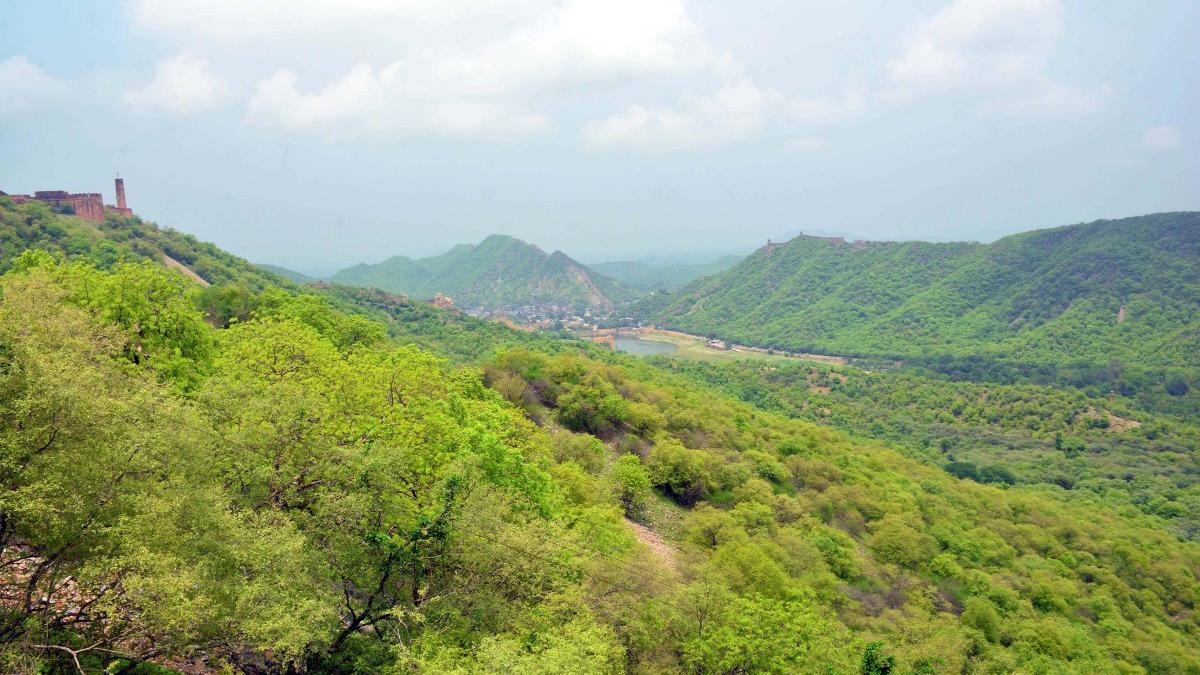
All of India’s hills face destruction from unsustainable development. The Aravalli Range, the subcontinent’s oldest, stretching from Rajasthan to Delhi, is a prime example of this environmental degradation. A central government panel has proposed redefining the Aravallis by introducing a new “height limit” of 100 metres above the surrounding landscape, a move that has been met with controversy. Under this criterion, internal assessments by the Forest Survey of India indicate that only 1,048 of the 12,081 mapped hills—a mere 8.7 per cent—would qualify as part of the protected range.
Consequently, vast areas of low hills and ridges would lose their legal safeguards, opening the door to widespread sand mining and real estate development. This destruction would devastate the region's natural defences: disrupting groundwater recharge and dismantling the crucial barrier that blocks sandstorms from the Thar Desert. Ultimately, it risks accelerating long-term desertification in the National Capital Region, an area already burdened with some of the world's worst air quality.
While aggressively promoting the unchecked expansion of the built environment—through road-widening projects like the Char Dham initiative in Uttarakhand, deforestation, rail lines, dams, and extensive tunnelling—the government is ignoring the growing reality of climate change and ecological fragility. Extreme rainfall is increasing, glaciers are retreating, and hill slopes are becoming unstable due to blasting, excavation, and the removal of forests. At the same time, rivers are being drained by continuous dam construction, while urban infrastructure encroaches on ecosystems that were never meant to bear such loads.
Even the strongest engineering is no match for nature's forces. When slopes fail, bridges and dams worth billions can collapse in an instant. While infrastructure is essential, it must be grounded in mountain logic. True progress lies in building with nature, not against it.
Mountains are vital indicators of our planet's health. The changes occurring in these high-altitude regions determine how rivers flow, crops grow, and livelihoods are sustained across vast, dependent lowlands. Yet, despite their critical role, mountains receive far less global attention than ecosystems like the Amazon or the polar regions.
International Mountain Day is more than a celebration; it is a vital call to listen. The message from our mountains is a clear and urgent warning. If we are to honour the vision of a land that is "watery, fruitful, green, and cool," as envisioned in Vande Mataram, our first duty is to restore our landscapes by radically reducing the damage we inflict upon them. Their destabilisation—through deforestation, reckless construction, and climate change—directly threatens the water, food, and climate security of billions downstream. Yet, global recognition of their crisis remains woefully inadequate.
True observance means moving beyond symbolic gestures. It demands that we hold governments and industries accountable, insisting on policies that protect these fragile ecosystems with the rigour they deserve. To secure a fertile and resilient future, we must fight for our highest places. When the mountain speaks, we have no choice but to listen—and act, demanding decisive action to protect these vital landscapes—and in doing so, safeguard our collective future.



Leave a comment