

The institutional frameworks regulating industrial pollution control across the subcontinental river systems faced a significant, data-driven transformation today. In a sweeping administrative intervention, the Central Pollution Control Board (CPCB) has issued a strict statutory directive compelling hundreds of manufacturing facilities operating within the Ganga drainage basin to migrate their operational parameters onto open-access public servers. Aimed at dismantling decades of localised oversight corruption and data concealment, the federal mandate introduces heavy financial penalties for installations failing to provide real-time digital transparency for their chemical discharges. TreeTake presents a comprehensive report on this digital enforcement rollout, examining the strict sensor integration protocols, the pushback from corporate processing sectors, and the strategic pathways to restore the region’s heavily stressed riverine networks.
The Electronic Mandate and Sensor Integration Protocols
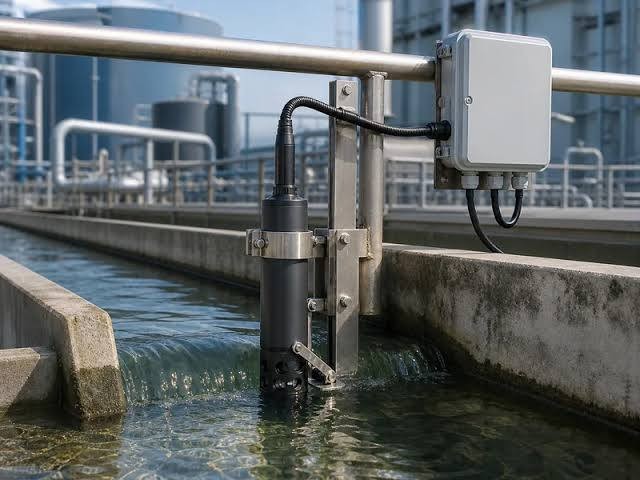
The operational parameters governing industrial waste management underwent an immediate, structural escalation on as the Central Pollution Control Board finalised its multi-state electronic tracking framework. Under the newly activated regulatory codes, all heavily polluting manufacturing units classified under the "grossly polluting industries" registry must integrate automated, continuous effluent monitoring systems directly into their primary discharge channels. This environmental policy covers major industrial hubs spanning Uttarakhand, Uttar Pradesh, Bihar, and West Bengal, targeting sectors that have historically contributed the highest toxic loads to the river system.
The statutory guidelines demand that the integrated electronic sensors must dynamically capture critical water quality indices, including biochemical oxygen demand, chemical oxygen demand, total suspended solids, and heavy metal concentrations. Rather than routing these data logs exclusively through closed, internal municipal servers where parameters could be subject to administrative manipulation, the central board has forced a structural shift. Default installations are now legally required to host these live data streams on open-access public dashboards managed by independent scientific centres. Facilities that fail to initialise stable electronic connections or are caught falsifying their automated telemetry lines face immediate closure orders, alongside a standardised environmental compensation fine of five lakh rupees per day of non-compliance.
Official Sustainability Metrics and Industrial Resistance
The aggressive enforcement sweep has drawn immediate, defensive responses from regional infrastructure conglomerates and chemical manufacturing federations, who claim that the sudden electronic reporting codes ignore severe technical limitations. Energy and chemical plant managers argue that maintaining high-precision water sensors inside highly corrosive industrial waste streams introduces severe maintenance challenges, and assert that the centralised database frequently suffers from communication network dropping errors that trigger false violation alarms. They maintain that the public hosting of raw, unverified data lines will expose proprietary processing metrics and fuel unfair public litigation.
"The enforcement of these absolute electronic transparency structures represents an unviable operational shock for small and medium-scale industrial units because the digital infrastructure remains highly unstable," argued a senior operations executive representing a prominent northern India chemical manufacturing association. He stressed that older production layouts require extensive engineering modifications to incorporate automated telemetry lines. "We are facing severe mechanical vulnerabilities, as highly acidic wastewater frequently degrades sensor membranes within hours, leading to inaccurate data spikes. Penalising infrastructure operators by executing immediate closure orders while the central administration fails to provide a standardised, plug-and-play testing framework will severely disrupt regional manufacturing output and threaten thousands of factory jobs."
This corporate narrative has faced firm resistance from federal pollution control architects, who emphasise that public health and river basin preservation cannot be sacrificed to accommodate corporate operational delays. Regulators maintain that the current digital directives follow repeated warnings and multi-year transition windows that were systematically ignored by utility boards. "The implementation of real-time online monitoring systems is a non-negotiable metric for the ecological restoration of the Ganga basin, and our teams will execute immediate inspections to ensure that no defaulting cluster evades these transparency mandates," announced a senior technical director attached to the Central Pollution Control Board during an operational review session. He clarified that regional teams are legally empowered to freeze operations at non-compliant sites. "We have established an absolute tracking baseline, and the data-sharing linkage to open public servers is designed to eliminate the long-standing scandal of self-reported compliance padding. The recovery of these penalties will proceed directly through unalterable land revenue channels if compliance deadlines are breached."
The Academic Critique and Landscape-Level Accountability
The institutional stand-off has revived an intense, high-stakes academic debate among landscape ecologists and subcontinental resource experts regarding the ultimate carrying capacity of the region's heavily industrialised riverine basins. Independent researchers utilising automated remote sensing to track ambient river degradation have demonstrated that traditional post-facto field sampling routines systematically failed to capture illegal midnight dumping operations executed by textile and tannery units.
"The deployment of automated effluent monitoring fines represents a critical transition toward data-driven environmental governance across our industrial corridors," noted Dr Ashutosh Tripathi, a senior geospatial analyst specialising in subcontinental riverine health indices, during an environmental evaluation session. He observed that shifting data flows to open public servers removes the old bureaucratic monopoly over environmental information, empowering local agrarian communities to cross-verify river conditions. "However, the next challenge for the central board is ensuring that these localised datasets are integrated into broader catchment-level models. True sustainability requires that the money recovered from these environmental compensation penalties is channelled directly into building public common effluent treatment plants, thereby turning a punitive regulatory mechanism into a self-sustaining green infrastructure loop."
Strategic Pathways to Catchment Security
Dismantling the systemic failures gridlocking subcontinental water governance requires an immediate overhaul of development approval protocols. First, the Ministry of Jal Shakti must legally mandate the integration of high-resolution, unalterable satellite telemetry to freeze the land-use baselines of all high-priority industrial corridors, rendering any unauthorised chemical modifications a non-bailable criminal offence. Second, local development bodies must be statutorily banned from issuing new industrial licenses within a five-kilometre radius of a verified floodplain, ensuring that natural hydrological shock absorbers are legally insulated from concretion. Finally, the central government must introduce a unified, fast-track fiscal ledger that holds state pollution control officers personally liable under environmental protection acts for failing to intercept un-rejuvenated discharges, guaranteeing that long-term riverine sustainability is engineered directly into the foundational tier of subcontinental urban planning.


.jpg?resize=120%2C90&ssl=1)



Leave a comment