

TreeTake Network
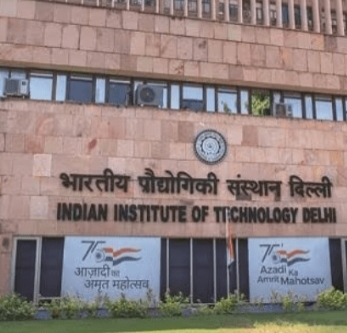
A multidisciplinary team of computational climate scientists and academic researchers at the Indian Institute of Technology Delhi (IIT-Delhi) has successfully published a pioneering, ultra-high-resolution bioclimatic dataset engineered to transform historical temperature and precipitation cycles into precise, actionable ecological metrics. Released on November 19, 2026, the comprehensive open-source dataset downscales over 40 years of macro-climate variables into a refined 1-kilometre grid resolution across the Indian subcontinent. The breakthrough spatial matrix allows wildlife conservationists, forest administrators, and agricultural planners to model localised micro-climate shifts with unprecedented precision, filling a critical analytical gap in predicting regional habitat transitions and vulnerability profiles.
The computational framework utilises advanced machine learning architectures to synthesise raw satellite observations and ground-station reanalysis data, producing 19 distinct bioclimatic indicators such as isothermality, mean temperature of the coldest quarter, and precipitation seasonality. This ultra-granular resolution is already being heralded as a structural turning point for field biology, where macro-scale climate models often fail to account for the complex topographies of mountain ranges like the Western Ghats or the Shivalik-Himalayan landscape.
Academic and Ecological Research Statements
- Lead Climate Modeling Scientist at IIT-Delhi: "By converting raw historical weather records into highly localized, multi-layered bioclimatic parameters, we are providing conservationists with an unprecedented predictive lens. Our models show that climate change does not impact landscapes uniformly; a 1-kilometre resolution allows us to pinpoint specific micro-refugia where endangered flora and fauna have the highest statistical probability of surviving temperature extremes over the next 50 years."
- Senior Computational ecologist and Dataset Co-Author: "The computational power required to process four decades of historical reanalysis down to a 1-kilometre scale across India was immense. We designed this framework specifically to ensure that field-level forest officers, who are actively managing biodiversity lines on the ground, can utilise raw data without needing high-performance computing clusters themselves."
- Distinguished Climate Scientist at the Centre for Climate Change Research: "Traditional global circulation models operate on a coarse grid of 50 to 100 kilometres, which completely flattens the ecological realities of complex topographies. This ultra-high-resolution dataset allows us to model exact watershed dynamics and forest canopy shifts, offering a highly robust foundational architecture for India's long-term climate adaptation and biodiversity strategies."
The release of the dataset is expected to immediately modernise how state forest departments draft their statutory climate action plans. By integrating these refined bioclimatic metrics into existing geographic information systems, regional administrators can accurately predict changes in forest composition, map the shifting boundaries of malaria and other vector-borne wildlife diseases, and pre-emptively identify agricultural zones highly vulnerable to sudden precipitation irregularities.
Editor's Note: The publication of this ultra-high-resolution dataset by IIT-Delhi marks a fundamental shift from speculative climate forecasting to precision environmental engineering. By equipping field biologists with sub-kilometre data points, academia has successfully democratised advanced climate informatics for grassroots conservation. However, the true test of this computational breakthrough lies in its institutional integration. Unless state forest bureaucracies rapidly modernise their planning workflows to actively consume and execute strategies based on these bioclimatic metrics, this world-class data risks remaining confined to academic journals while real-world habitats continue to fragment under unmonitored ecological pressures.



Leave a comment