

TreeTake Network
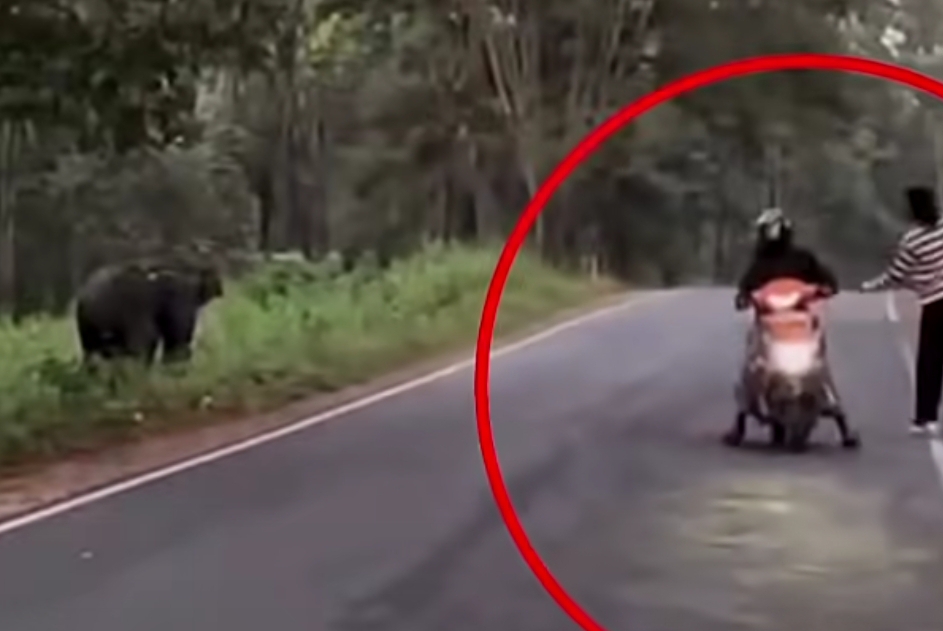
The Karnataka Forest Department has officially launched a rigorous, non-bailable criminal investigation following the viral dissemination of cell phone footage capturing an egregious act of animal cruelty along a state highway dissecting the Nagarhole Tiger Reserve. Forest monitoring units verified that the incident occurred on November 19, 2026, when individuals operating a motor scooter bearing the distinct registration plate KA 09 NY 0257 deliberately stopped their vehicle within the protected boundaries to confront a wild tusker. The video clearly documents the pillion rider dismounting the idling two-wheeler to deliberately hurl a large stone directly at the head of the stationary megaherbivore, a reckless provocation that drew immediate national outrage from wildlife conservation networks.
State law enforcement and forest protection teams immediately mobilised to trace the vehicle ownership parameters, classifying the offence under strict sections of the Wildlife (Protection) Act. Expressing severe institutional condemnation, Karnataka Minister for Forests, Ecology and Environment Ramalinga Reddy stated that he has directly instructed senior forest officials to pursue the swiftest and most severe legal action under the law against those specific individuals responsible for throwing stones at the elephant inside the protected reserve boundaries. The Minister emphasised that such hostile infractions not only compromise the safety of vulnerable wildlife but set a highly dangerous precedent for public transit through vital ecological zones.
The gravity of the highway confrontation has reignited intense debate regarding the enforcement of stringent speed and behavioural restrictions on public vehicular traffic moving through sensitive wildlife corridors. Mirroring these systemic anxieties, an official spokesperson for Travel Wayanad issued an urgent warning to regular commuters, stating that harassing, provoking, or intentionally stopping wildlife along these forest arterial roads for cheap thrills or social media visibility is highly illegal, fundamentally reckless, and poses severe, life-threatening dangers of immediate vehicle destruction by agitated animals. Field biologists have long warned that provoking adult bull elephants on active roads drastically increases the probability of retaliatory charges, directly jeopardising innocent travellers who utilise the interstate corridors later in the day.
Range forest officers have now deployed specialised patrolling teams to monitor the specific road segment where the pelted elephant was last tracked, seeking to ensure the animal has not sustained ocular injuries or entered a state of heightened territorial aggression. Conservators emphasised that the department is rapidly coordinating with regional transport authorities to ensure the immediate apprehension of the vehicle owner, asserting that utilising statutory penalties to penalise such brazen violations remains the most effective mechanism to maintain safe biological boundaries between humans and territorial wilderness populations.
Editor's Note: The Nagarhole animal cruelty incident exposes a structural failure in public compliance and highway monitoring within India's premier wildlife habitats. While structural barriers and night traffic bans exist in fragments, daytime commuter behaviour remains poorly policed, transforming critical migration corridors into volatile tourist spectacles. To permanently eliminate these hazardous encounters, the forest administration must move beyond reactive penal steps by implementing advanced, automated electronic surveillance frameworks alongside heavy on-the-spot fines for any unauthorised vehicular stoppage inside tiger and elephant reserves.



Leave a comment