

Selfless Souls
Dr Mere Takoko (Ngāti Porou) is the Chief Executive Officer and Co-Founder of the Pacific Whale Fund and Executive Trustee of the Moananui Sanctuary Trust. Holding a PhD in Māori and Indigenous Studies from Te Herenga Waka—Victoria University of Wellington, she is the author of the He Whakaputanga Moana Declaration and the architect behind the Te Mana o te Tohorā Legal Personhood Bill. As an Indigenous climate solutionist, Dr Takoko integrates traditional Polynesian knowledge with high-integrity nature finance to pioneer the ‘Economy of Aroha’, transforming global conservation by recognising whales as sacred ancestors and sovereign climate regulators.
Q: Growing up with your ancestral connection to Paikea, the whale rider, when did you first feel called to dedicate your life to protecting whales?
I belong to the northern clans of Ngāti Porou, tracing my lineage directly to Paikea, the whale rider who was brought to our shores by his whale ancestor of the same name after surviving the Te Huri-pūrei-ata massacre at sea. For me, this connection was never a mythological metaphor; it is an unbroken, 1,200-year customary marine jurisdiction and a binding interspecies covenant. My calling wasn't a sudden epiphany but a steady hum in my blood. Standing at the edge of my whenua (land) at Te Kautuku in Rangitukia, I felt a deep dissonance because the songs of the tohorā—the melodies of my ancestors—had faded into an unsettling silence due to the legacy of industrial whaling. That silence demanded action. I knew I had to dedicate my life to restoring our broken relationship with the moana (ocean) and reviving the ancient mandate of guardianship.
Q: What was going through your heart when you wrote He Whakaputanga Moana to recognise whales as sacred ancestors?
As I authored the He Whakaputanga Moana Declaration during my doctoral research, I was driven by a profound desire to restore the kinship between humanity and the ocean. When I wrote it, my heart was focused on dismantling the paradigm of extraction and returning to one of reciprocity, recognising whales not as resources, but as living ancestors deserving of our protection. It was a monumental, emotional milestone to see it signed in Rarotonga by the late Māori King Tūheitia Pōtatau Te Wherowhero VII and paramount Pacific Ariki. I intended to create an indigenous legal instrument that all signatories could use to assert their mana moana (spiritual connection to the ocean).
Q: How does the Te Mana o te Tohorā Legal Personhood Bill carry that vision forward by giving whales real rights in court?
The Te Mana o te Tohorā Legal Personhood Bill takes the visionary ethics of the Declaration and translates them into enforceable statutory law. Current legal frameworks treat the ocean and its inhabitants as extractable resources, which has failed to halt biodiversity collapse. This legislation shifts that paradigm entirely by codifying whales as self-aware beings with inherent rights to life, free movement and freedom from harm, such as noise and pollution. It grants whales the legal standing to sue for damages, represented directly by indigenous guardians. By designating whales as legal entities and anchoring their baseline natural capital valuation at two million United States dollars per whale due to the eco-services they provide to our oceans, we are effectively de-risking investment for global markets and transforming conservation of whales into an investable asset class.
Q: As you represent the Pacific at COP31, what has been the most meaningful part of carrying indigenous ocean wisdom into global climate rooms?
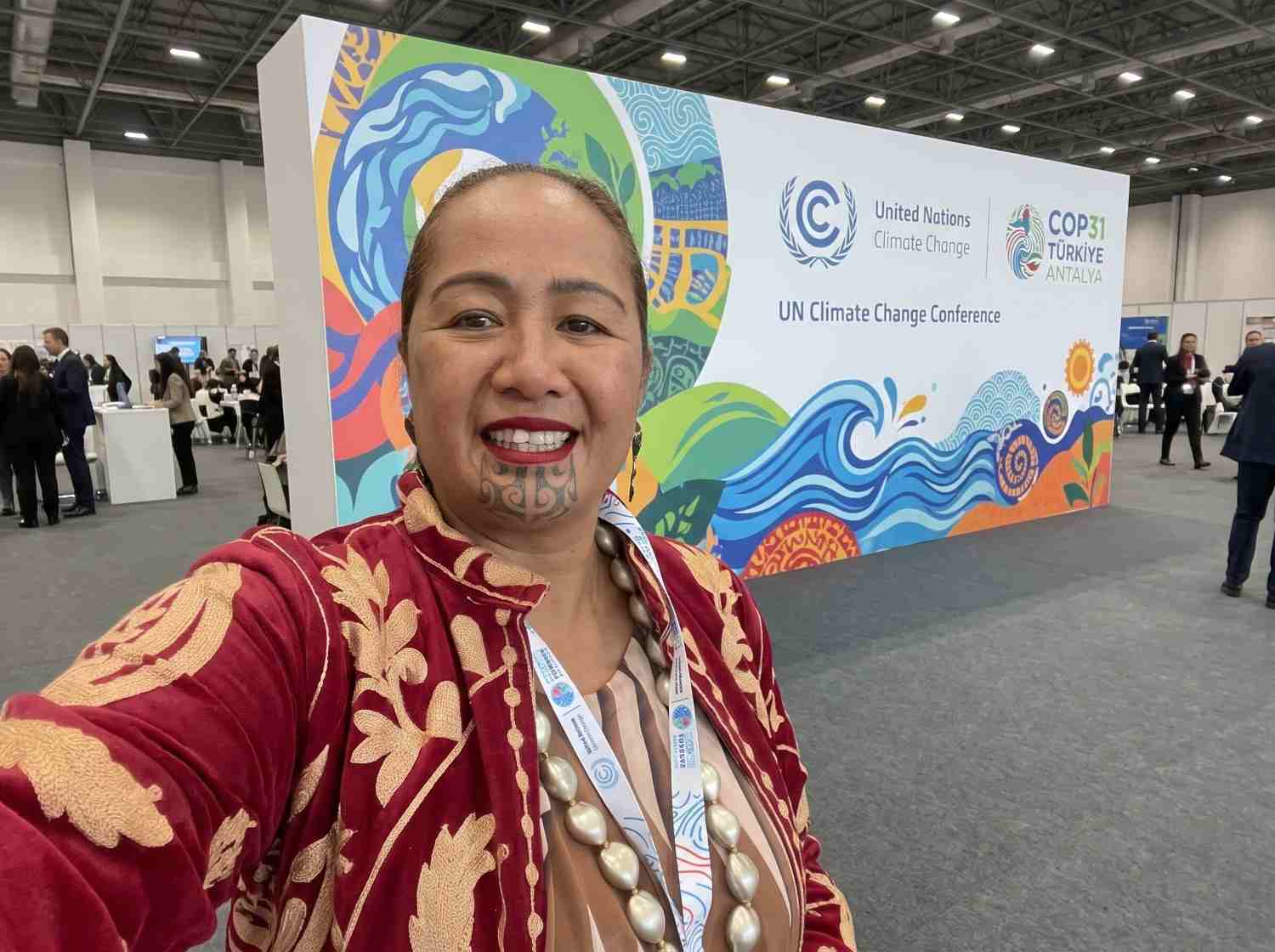
As I navigate the climate negotiations here at COP31 in Antalya, the most meaningful part of my work is introducing the ‘Economy of Aroha’ to rooms traditionally dominated by extractive neo-liberal economics. I am showing global leaders that indigenous cosmology is not mere folklore; it is humanity's original predictive science. By advancing frameworks like the Moananui Kinship Bond, I am demonstrating that we can fund active, technology-enabled monitoring across millions of square kilometres without creating new sovereign debt for Pacific nations. Bringing the intelligence of what I refer to as the 'Deep Code' of life into spaces like the UN allows me to prove that the verifiable uplift of mauri (ecosystem vitality) is the only true metric of planetary prosperity.
Q: Leading the Pacific Whale Fund takes immense personal energy—what keeps you going when the work feels overwhelming?
The scale of the challenge can absolutely feel overwhelming, especially when structuring a $100 million special-purpose vehicle and attempting to finance a 12.5 million square kilometre primary sanctuary footprint. But I draw immense strength from my whakapapa (genealogy and lineage). I think of my ancestor, Wi Takoko, who fell at the Battle of Te Ranga in 1864 defending our sovereignty and my great-great-great-grandfather Harawira Huriwai, who fought relentlessly in the courts to protect our mana whenua (the Māori group that holds customary authority, territorial rights, and jurisdictional responsibility over a specific geographic area and its natural resources) and takutaimoana (coast). Their sacrifices remind me that my current work is simply the modern translation of their sovereign defence. I am also deeply revitalised by the youth I am partnering with through programmes like EPIC-Animals, EPIC Wayfinders, and Pod Guardians. Seeing the next generation of indigenous wayfinders step up to protect our marine estate gives me the absolute certainty that this work will endure.
Q: What does caring for the ocean look like in your own quiet, everyday life?
For me, caring for the moana (ocean) in the quiet moments is about staying anchored in Mātauranga Māori and the intergenerational responsibilities of kaitiakitanga (the traditional Māori holistic concept of guardianship, stewardship, and protection over the natural world). It looks like spending time with the historical research archives, traditional oral histories and customary fishing ground maps of our Tairāwhiti coastal hapū (clan), ensuring that knowledge is actively preserved and understood. When I am home, it means engaging in customary marine management and gathering kaimoana (food from the sea ) in ways that honour the natural balance of our local waters. Even in my downtime, my connection to the ocean remains constant—often simply listening to podcasts on international ocean governance, Arctic policy or environmental science to stay attuned to broader global currents. Ultimately, my everyday stewardship is a continuous, quiet alignment with the ancestral knowledge that binds our people to the sea.
Q: For our readers who want to live in true service to nature, what is one piece of advice you would share?
I would advise you to fundamentally shift your perspective from extraction to relational care—what I call the Economy of Aroha (compassion). Stop viewing nature as a warehouse of goods and start recognising it as a living infrastructure of kinship. You do not need to be a marine biologist or a policymaker to make a difference. Begin by recognising the mauri (life force) in your local environment and ask yourself how your daily actions can actively uplift that vitality, rather than deplete it. When we treat the natural world—whether a river, a forest or the vast ocean—as a senior relative to whom we owe a duty of care, sustainability becomes an effortless by-product of love.



Leave a comment